Natural Diamond Bracelets: Buying Tips, Styles and Quality Guide
A beautifully designed diamond bracelet has a rare ability to look elegant without feeling overly formal. Whether worn with an evening outfit, traditional Indian wear or a simple everyday ensemble, Natural Diamond Bracelets can bring refined sparkle to the wrist while becoming jewellery that can be enjoyed for years.
However, buying a diamond bracelet involves more than choosing the design with the most sparkle. Diamond quality, total carat weight, setting security, metal purity, bracelet construction and comfort all influence the final piece. At Virasah, understanding these details can help jewellery lovers make more informed choices when exploring fine diamond and gemstone jewellery.
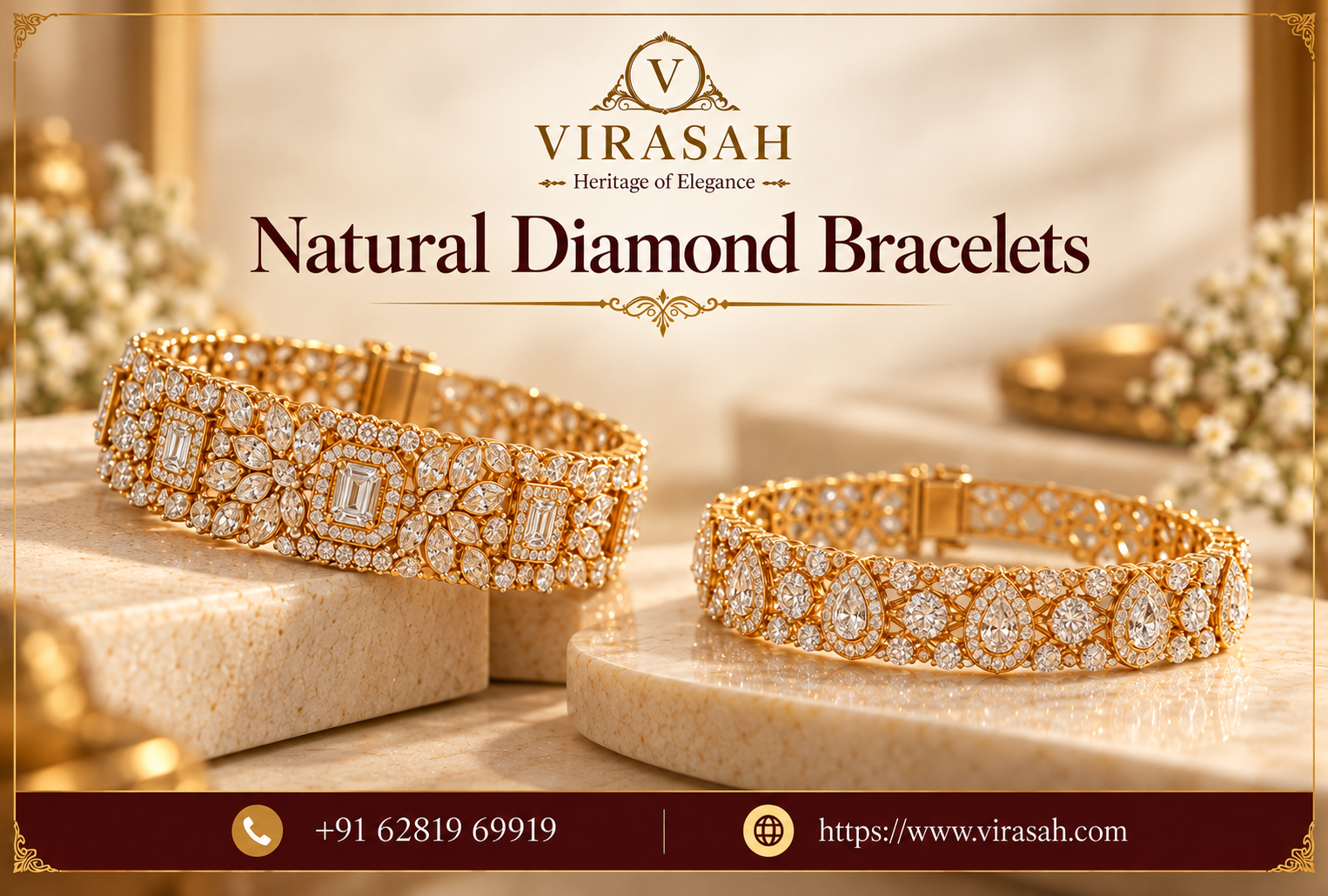
What Are Natural Diamond Bracelets?
Natural Diamond Bracelets are bracelets set with diamonds formed naturally within the earth rather than diamonds produced through laboratory growth processes. Natural diamonds are valued according to several characteristics, including cut, colour, clarity and carat weight.
The Gemological Institute of America explains the 4Cs of diamond quality, which provide a widely recognised framework for understanding diamond characteristics.
In a bracelet, however, buyers should look beyond individual diamond grades. Because several diamonds are often positioned next to one another, consistency becomes extremely important. Diamonds with similar colour, size and overall appearance create a more balanced and luxurious-looking bracelet.
Popular Natural Diamond Bracelet Styles
1. Diamond Tennis Bracelets
The tennis bracelet is one of the most recognised styles of Natural Diamond Bracelets. It normally features a continuous line of individually set diamonds that surrounds the wrist.
Its clean design allows it to work equally well as everyday fine jewellery and as an accessory for weddings or formal occasions. When buying one, closely inspect the flexibility of the links, clasp construction and security of each setting.
2. Diamond Bangle Bracelets
Diamond bangles generally have a more structured appearance. They may feature diamonds across the entire circumference or concentrate them around the visible front portion.
These designs work especially well when buyers want jewellery that can be worn alone or stacked with gold and gemstone bangles.
3. Delicate Diamond Bracelets
Minimal bracelets featuring small natural diamonds are increasingly suitable for everyday styling. Their subtle proportions make them easy to combine with watches, chains and other wrist jewellery without creating an excessively heavy appearance.
4. Statement Diamond Bracelets
For weddings, receptions and important celebrations, wider designs may combine multiple rows of diamonds, geometric arrangements or gemstone accents. Buyers who enjoy colour can also explore jewellery inspiration through Virasah's guide to emerald jewellery for weddings and special occasions.
How to Check the Quality of Natural Diamond Bracelets
Quality evaluation should be systematic rather than based only on the first impression. The sparkle may attract your attention, but construction and diamond consistency determine how successful the jewellery is overall.
| Quality Factor | What to Check | Why It Matters |
|---|---|---|
| Cut | Brightness, proportions and consistency | Well-cut diamonds generally return light more effectively. |
| Colour | Similar appearance across all diamonds | Matching creates a balanced bracelet. |
| Clarity | Visible inclusions and overall transparency | Clarity affects appearance and quality. |
| Carat Weight | Total diamond weight and individual stone sizes | Helps buyers understand how diamond weight is distributed. |
| Setting | Prongs, links and stone security | A strong setting helps protect diamonds during wear. |
| Metal | Purity, strength and finishing | The bracelet structure depends on its precious metal foundation. |
Understanding the 4Cs Before Buying
Cut
Cut deserves particular attention because it strongly influences how a diamond interacts with light. When several diamonds are used in Natural Diamond Bracelets, visually consistent cutting also helps the stones appear harmonious.
Buyers wanting a deeper understanding of diamond shapes and cutting can read Virasah's complete guide to the best diamond cuts. You can also consult the GIA diamond buying guide for independent educational information.
Colour
Diamond colour should be judged together with the metal used in the bracelet. White metals may make differences in diamond colour more noticeable, while yellow or rose-toned metals can create a warmer overall appearance.
Clarity
You do not necessarily need to pursue the highest possible clarity grade for every diamond in a bracelet. What matters visually is that the stones look clean, bright and well matched at normal viewing distance. Quality documentation can help buyers understand what they are paying for.
Carat Weight
With Natural Diamond Bracelets, product descriptions often focus on total diamond weight. Two bracelets with similar total carat weight can nevertheless look quite different because one might contain many small stones while another uses fewer but larger diamonds.
Match the Bracelet to Your Jewellery Style
Your existing jewellery collection can help determine which bracelet will be most useful. Someone who regularly wears colourful precious stones might prefer a diamond bracelet that works as a neutral companion piece.
For example, jewellery collectors interested in exceptional coloured stones can explore Virasah's guides to Tanzanite jewellery, Burmese Ruby and Kashmir Sapphire.
For a broader understanding of collectible stones, read the rare gemstones in India guide. Those specifically building sapphire or ruby collections can also explore the Sapphire Jewellery Guide and Ruby Jewellery Guide.
Brides can combine Natural Diamond Bracelets with necklaces, earrings or traditional pieces depending on the outfit and occasion. Virasah's Indian bridal wedding jewellery checklist offers additional inspiration when planning a coordinated bridal collection.
Check the Metal and Hallmark
The diamonds may receive most of the attention, but precious metal quality is equally important. Gold is commonly used for fine diamond bracelets because it combines beauty with practical jewellery construction.
Indian buyers should understand precious-metal hallmarking. The Bureau of Indian Standards hallmarking information explains how hallmarking is used to indicate precious-metal purity and fineness. Buyers should also retain the jewellery invoice and understand the metal purity stated for the piece.
Certification, Transparency and Responsible Buying
When buying valuable Natural Diamond Bracelets, ask the jeweller what documentation accompanies the product and how the natural diamonds have been identified or graded. For larger significant diamonds, laboratory reports can provide detailed grading information.
The GIA natural diamond grading information is useful for understanding professional diamond reports.
Responsible sourcing is another consideration for modern jewellery buyers. Educational information about the international rough-diamond trade can be found through the Kimberley Process. The Responsible Jewellery Council standards also provide information about responsible practices across jewellery supply chains.
Important Buying Tips for Natural Diamond Bracelets
- Compare diamonds in normal lighting: Do not judge brilliance under showroom spotlights alone.
- Inspect the clasp: A valuable bracelet should have a secure and easy-to-operate fastening system.
- Check the setting: Look carefully for uneven, loose or poorly finished prongs.
- Confirm the total carat weight: Understand whether the stated weight refers to all diamonds combined.
- Check the metal purity: Review hallmark and invoice information where applicable.
- Consider comfort: The bracelet should move naturally without frequently rotating, pinching or catching clothing.
- Ask about documentation: Understand the available diamond-quality and product information before buying.
How Should Natural Diamond Bracelets Fit?
A bracelet that is too tight can become uncomfortable, while an excessively loose bracelet may rotate constantly or face a greater risk of slipping over the hand.
For many styles, a comfortable fit leaves a little movement between the bracelet and wrist. Tennis bracelets should drape naturally without being loose enough to slide off. Structured diamond bangles require particular attention to wrist and hand measurements because they behave differently from flexible bracelets.
How to Care for Natural Diamond Bracelets
Diamonds are known for exceptional hardness, but diamond jewellery still requires care because settings, clasps and precious metals can be scratched or damaged.
Remove Natural Diamond Bracelets before activities that may expose them to strong impacts, heavy cleaning products or unnecessary abrasion. Store the bracelet separately from other jewellery to reduce scratching and tangling.
For detailed guidance, see the GIA diamond care and cleaning guide. Professional inspection can also help identify loose stones, damaged prongs or clasp problems before they lead to stone loss.
Frequently Asked Questions About Natural Diamond Bracelets
1. Are Natural Diamond Bracelets suitable for everyday wear?
Yes. Well-made diamond bracelets can be worn regularly, particularly simpler tennis and minimal designs. However, they should be removed during strenuous activities and handled carefully to protect the settings and clasp.
2. What should I check before buying a natural diamond bracelet?
Check diamond quality, total carat weight, consistency between stones, precious-metal purity, setting workmanship, bracelet flexibility, clasp security, size and available documentation.
3. Which style of diamond bracelet is most versatile?
A classic single-row tennis bracelet is particularly versatile because its clean design works with western outfits, Indian ethnic wear, bridal jewellery and everyday fine jewellery.
4. Is higher carat weight always better?
No. Total carat weight is only one quality consideration. A beautifully matched bracelet with excellent craftsmanship and attractive diamonds can offer a stronger visual result than a heavier bracelet with inconsistent stones or poor construction.
5. Should I check certification when buying Natural Diamond Bracelets?
You should ask what quality documentation is available and how the diamonds have been identified. Individual reports are especially relevant for larger significant stones, while multi-stone bracelets may be documented differently depending on their construction.
6. How do I know whether the gold in my diamond bracelet is genuine?
For jewellery purchased in India, check the applicable BIS hallmark information and ensure that the invoice clearly states relevant metal-purity details.
7. Can a diamond bracelet be worn with gemstone jewellery?
Absolutely. The relatively neutral appearance of diamonds allows a bracelet to complement emerald, ruby, sapphire, tanzanite and many other coloured gemstone pieces.
Final Thoughts
Buying Natural Diamond Bracelets becomes much easier when you look beyond sparkle and evaluate the entire piece. Diamond cut, colour, clarity and carat weight provide a foundation, but matching, metal purity, setting strength, clasp security, comfort and craftsmanship are equally important in bracelet jewellery.
Choose a style that works naturally with your wardrobe rather than selecting a bracelet only for one occasion. A carefully selected natural diamond bracelet can move effortlessly between everyday styling, celebrations, weddings and formal events while remaining an enduring part of a fine jewellery collection.
Explore Fine Jewellery at Virasah:
Discover beautifully crafted diamond and gemstone jewellery designed for meaningful occasions and timeless personal collections.
Website: www.virasah.com
Phone: +91 62819 69919