Wedding Accessories for Women: A Complete Styling Guide for Every Bride
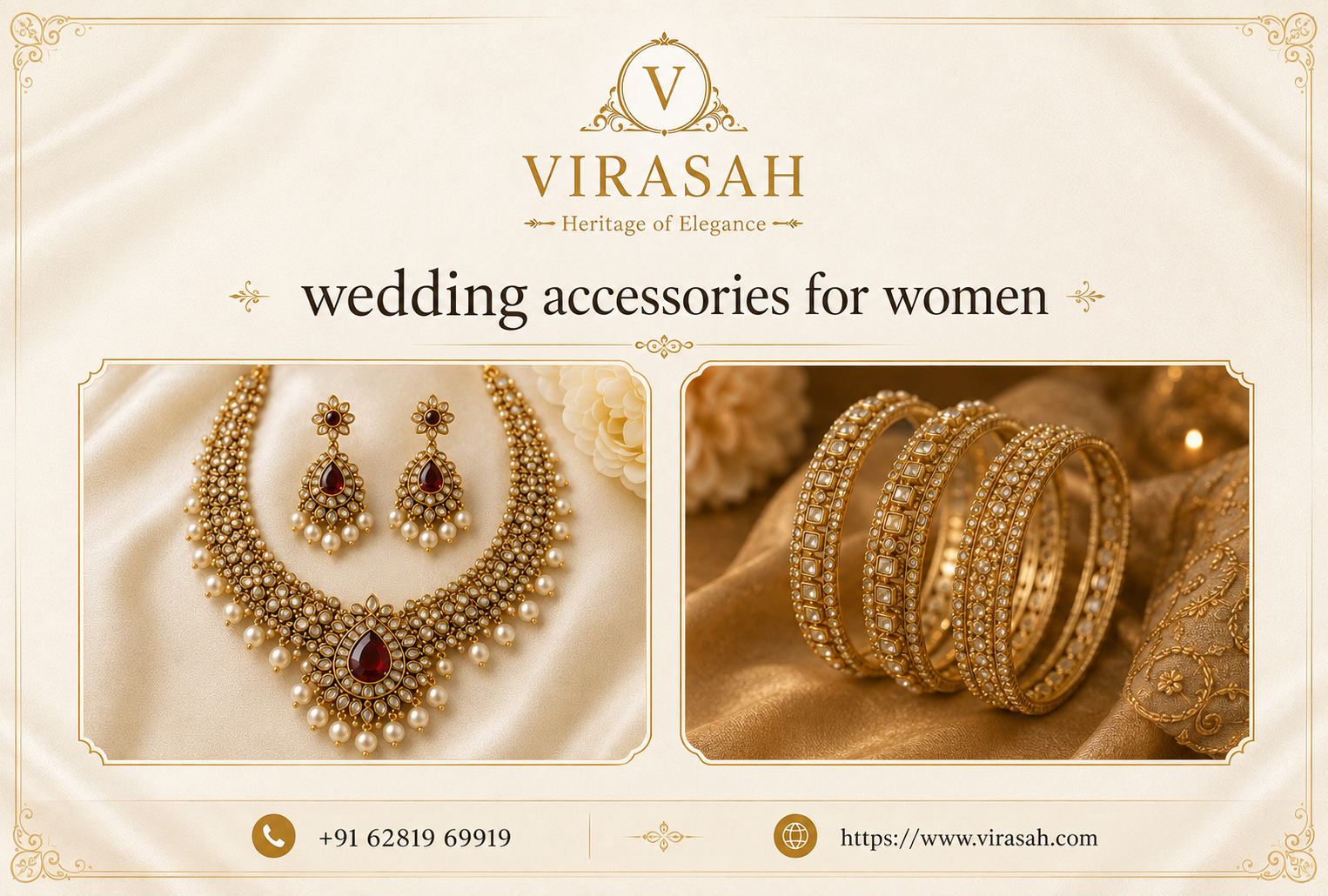
Why Bridal Accessories Matter
The right wedding accessories for women do much more than add sparkle. They help connect the bridal outfit, hairstyle, makeup and wedding theme into one harmonious presentation. A carefully chosen necklace can enhance the neckline, while earrings can frame the face and complement the bridal hairstyle.
Indian weddings often include several ceremonies, and each function may require a different styling approach. A bride may prefer floral or lightweight accessories for her haldi ceremony, colourful statement pieces for mehendi, refined jewellery for the engagement and a grand traditional set for the wedding ceremony.
Accessories also carry emotional and cultural meaning. Certain pieces may represent family traditions, regional craftsmanship or blessings passed from one generation to another. This is why bridal styling should not be based only on trends. It should also reflect the bride’s identity, comfort and personal story.
Essential Accessories for a Complete Bridal Look
1. Bridal Necklaces
A necklace is often the central element of bridal jewellery. Depending on the outfit and neckline, a bride may select a choker, long necklace, layered haar, pendant necklace or a combination of different lengths.
High-neck blouses generally look best with compact necklaces or chokers, while deep necklines provide more space for layered pieces. Brides wearing heavily embroidered outfits should balance the look with jewellery that complements the garment without competing with every decorative detail.
2. Statement Earrings
Earrings frame the bride’s face and remain visible in close-up photographs. Jhumkas, chandbalis, drop earrings and stud-and-drop combinations are popular choices. The ideal size depends on the hairstyle, necklace and comfort level of the bride.
When selecting wedding accessories for women, earrings should be checked for weight and secure fastening. Very heavy designs may appear beautiful but can become uncomfortable during long ceremonies. Support chains or ear-lobe support patches can provide additional comfort.
3. Maang Tikka and Matha Patti
A maang tikka brings attention to the forehead and helps complete a traditional bridal hairstyle. A matha patti creates a more elaborate effect by extending across the hairline. Brides should choose a design that suits the shape of the face and the placement of the hair parting.
Round faces can benefit from longer central pendants, while brides with longer faces may prefer broader or more compact forehead ornaments. The accessory should be secured properly before the ceremony so it remains centred throughout the event.
4. Bridal Bangles
Bangles add movement, colour and cultural character to the bridal look. Glass bangles, metal bangles, stone-studded kadas and coordinated bracelet sets can be combined according to the bride’s outfit and regional traditions.
Brides should test the size before the wedding day. Bangles that are too tight can cause discomfort, while oversized bangles may slip or interfere with hand movements. A balanced set should feel secure while allowing the bride to move naturally.
5. Bridal Nose Ring
A bridal nath can range from a small, delicate ring to a grand circular design connected to the hair by a chain. It can create a striking traditional appearance, especially when coordinated with the necklace and forehead jewellery.
Clip-on designs are available for brides without a nose piercing. Before choosing a large nath, it is helpful to wear it during a trial session to ensure that speaking, smiling and eating remain comfortable.
6. Waist Belt or Kamarbandh
A kamarbandh defines the waist and adds structure to sarees, lehengas and traditional drapes. It can also help keep pleats or a dupatta securely positioned. Designs may be minimal and modern or heavily decorated with stones, beads and traditional motifs.
7. Anklets and Toe Rings
Anklets add a graceful finishing touch, especially when the bridal outfit allows the footwear and feet to remain visible. Toe rings may also form part of regional wedding traditions. These pieces should be smooth and comfortable because the bride may need to stand or walk for extended periods.
8. Hair Accessories
Hairpins, decorative combs, pearl strings, floral ornaments and embellished clips can enhance buns, braids and open hairstyles. The selected pieces should coordinate with the jewellery rather than introducing an unrelated design style.
Hair accessories must also be practical. They should stay secure during movement without pulling the hair or irritating the scalp. A complete hairstyle trial is strongly recommended before the wedding.
How to Choose Accessories for Different Wedding Outfits
Accessories for a Bridal Lehenga
Bridal lehengas offer flexibility for layered necklaces, statement earrings, bangles and waist belts. When the lehenga is heavily embroidered, repeat one or two colours from the embroidery in the accessory selection.
Accessories for a Saree
Sarees pair beautifully with traditional necklaces, temple-inspired pieces, jhumkas, bangles and hair ornaments. The jewellery should suit the fabric, border and draping style.
Accessories for a Gown
Bridal gowns usually work well with refined necklaces, elegant drop earrings, bracelets and delicate hair accessories. A single statement piece can create a sophisticated appearance.
Accessories for a Sharara
Shararas can be styled with chandbalis, passa-inspired hair ornaments, layered necklaces and coordinated bangles. The accessories can introduce traditional richness while keeping the outfit graceful.
The best wedding accessories for women should look like a natural extension of the outfit. Consider the garment’s colour, neckline, embroidery, fabric, silhouette and decorative motifs before finalising the jewellery.
Matching Accessories with Bridal Colours
| Bridal Outfit Colour | Suitable Accessory Tones | Styling Effect |
|---|---|---|
| Red or Maroon | Gold, kundan-style, green, pearl and antique tones | Traditional, regal and festive |
| Pink or Rose | Pearl, silver-tone, pastel stones and rose-gold shades | Romantic and graceful |
| Ivory or White | Emerald tones, pearls, gold and colourful stones | Elegant with a refined contrast |
| Green | Gold, ruby tones, pearls and antique finishes | Rich and culturally inspired |
| Blue | Silver-tone, crystal, pearl and contrasting pink stones | Modern and sophisticated |
| Pastel Shades | Pearls, delicate stones and soft metallic finishes | Contemporary and minimal |
Choose Accessories According to Your Face Shape
Round Face
Longer earrings and vertically shaped forehead ornaments can create a more elongated appearance. Avoid combining an extremely broad choker with very wide earrings unless the complete combination has been tested.
Oval Face
Oval faces can carry many styles, including chandbalis, jhumkas, studs and drop earrings. The final selection should be based on the hairstyle and neckline rather than face shape alone.
Heart-Shaped Face
Earrings that are wider at the bottom can help balance a narrower chin. Teardrop designs, chandbalis and medium-sized jhumkas are attractive options.
Square Face
Rounded earrings and curved jewellery designs can soften angular features. Circular chandbalis, hoops and rounded drops can create a balanced effect.
While face-shape recommendations are useful, personal confidence matters more than rigid styling rules. Brides should select wedding accessories for women that make them feel comfortable, expressive and naturally beautiful.
Styling Accessories for Different Wedding Functions
Engagement
Engagement styling can be elegant and polished. A statement necklace with matching earrings or a refined bracelet-and-earring combination can create a sophisticated look without appearing overly heavy.
Haldi Ceremony
Lightweight, colourful or floral-inspired accessories are practical for a haldi function. Avoid delicate pieces that may be difficult to clean after contact with turmeric, oils or ceremonial ingredients.
Mehendi Ceremony
Select accessories that do not interfere with the application of mehendi. Lightweight earrings, a maang tikka, a necklace and floral hair pieces can create a festive appearance while keeping the hands accessible.
Sangeet
Since dancing and movement are central to many sangeet celebrations, accessories should be secure and comfortable. Medium-weight earrings, well-fitted bangles and securely fastened hair ornaments are practical choices.
Wedding Ceremony
The wedding ceremony allows the bride to wear her most elaborate combination. However, every piece should still be coordinated. Wearing multiple heavy items without visual balance can make the styling appear crowded.
Reception
Reception jewellery can be contemporary, glamorous or minimal depending on the outfit. Statement earrings, a modern necklace, a bracelet and an elegant hair accessory may be enough to create a refined evening look.
Explore Elegant Bridal Accessories at Virasah
Brides looking for thoughtfully designed wedding accessories for women can explore the collections available at Virasah. The right selection can help create coordinated looks for engagement celebrations, mehendi functions, wedding ceremonies, receptions and other special occasions.
Before ordering, compare the accessory measurements with your neckline, hairstyle and outfit details. It is also helpful to keep photographs of the blouse, dupatta border and embroidery so that colours and design elements can be matched more accurately.
Common Accessory Styling Mistakes to Avoid
- Wearing too many statement pieces: Select one or two focal pieces and allow the remaining accessories to support them.
- Ignoring comfort: Test heavy earrings, nose rings, bangles and hair ornaments before the wedding day.
- Buying before finalising the outfit: Confirm the outfit colour, neckline and embroidery before selecting accessories.
- Mixing unrelated styles: Different finishes can be combined, but they should share a common colour, motif or design language.
- Forgetting the hairstyle: Earrings, forehead pieces and hair accessories must be planned together.
- Skipping a complete trial: Wear the outfit, jewellery, hairstyle and makeup together before the main event.
Bridal Styling Tip
Photograph the complete trial look in natural light and indoor lighting. Bridal jewellery may appear different under stage lights, flash photography and daylight, so checking multiple lighting conditions can help you make better adjustments.
How to Care for Bridal Accessories
Proper storage and handling can help preserve wedding accessories for women after the celebration. Store each item separately in a soft pouch or compartment to prevent scratches, tangling and friction between decorative surfaces.
- Apply perfume, makeup, hairspray and moisturiser before wearing accessories.
- Avoid direct contact with water, sweat, cleaning products and harsh chemicals.
- Wipe accessories gently with a clean, soft and dry cloth after use.
- Do not store damp jewellery inside airtight packaging.
- Keep delicate pieces away from direct sunlight and excessive humidity.
- Use individual pouches for necklaces, earrings and embellished hair accessories.
- Consult a suitable jewellery professional before using chemical cleaners.
Frequently Asked Questions
1. What are the most important bridal accessories?
Essential bridal accessories generally include a necklace, earrings, bangles, a maang tikka, hair accessories and suitable footwear. Depending on personal traditions, brides may also include a nose ring, waist belt, anklets and toe rings.
2. How should I choose accessories for a heavily embroidered lehenga?
Choose pieces that repeat selected colours or motifs from the lehenga without matching every detail. A balanced necklace and earring combination is usually more effective than wearing several competing statement pieces.
3. Should all bridal accessories have the same finish?
They do not have to be identical, but they should look connected. Accessories can be coordinated through a shared metallic tone, gemstone colour, pearl detail, motif or overall design style.
4. How early should bridal accessories be purchased?
Begin selecting accessories after the main bridal outfit and blouse design have been finalised. Purchasing early provides enough time for styling trials, adjustments, replacements and delivery.
5. How can heavy earrings be made more comfortable?
Use support chains, ear-lobe support patches or lightweight designs that create a statement appearance without excessive weight. Wear the earrings during a trial to identify discomfort before the event.
6. Can one accessory set be used for multiple wedding functions?
Yes. A coordinated set can be restyled by changing the necklace layers, earrings, bangles or hair accessories. This creates different appearances while making better use of the same collection.
7. Which accessories work best for a minimalist bride?
Minimalist brides can choose a refined necklace or choker, medium-sized earrings, a delicate maang tikka and a simple bracelet. Clean designs with one focal detail often create an elegant appearance.
8. How do I keep accessories secure during the ceremony?
Check every clasp, pin, chain and fastening during the styling trial. Ask the hairstylist to secure forehead and hair accessories properly, and keep spare pins and earring backs in an emergency kit.
9. Where can I shop for bridal accessories online?
You can explore wedding accessories for women through Virasah’s online website. Review product descriptions, measurements, colours and styling photographs before selecting pieces for your bridal outfit.
Final Thoughts
Selecting wedding accessories for women should be an enjoyable part of the bridal journey. Instead of choosing every piece separately, visualise the entire look, including the outfit, hairstyle, makeup, footwear and wedding setting.
Give equal importance to comfort and appearance. A beautifully coordinated collection that allows the bride to move, smile and celebrate confidently will always be more valuable than an overloaded look. With thoughtful planning, each accessory can contribute to a bridal style that feels graceful, personal and unforgettable.