Ethnic Jewellery for Festivals: A Complete Guide to Elegant Festive Styling
Discover how to select, style, coordinate and care for traditional jewellery that brings confidence, heritage and celebration to every festive outfit.
Indian celebrations are filled with colour, family traditions, meaningful rituals, beautiful clothing and memorable photographs. The right accessories bring all these elements together. Choosing ethnic jewellery for festivals is not simply about wearing the heaviest necklace or the brightest earrings. It is about finding pieces that complement the occasion, suit the neckline and fabric of your outfit, remain comfortable for several hours and express your personal connection with Indian design.
From intimate pujas and family gatherings to Diwali celebrations, Navratri nights, Eid festivities, weddings and temple visits, every occasion offers a different styling opportunity. A carefully chosen jewellery set can make a simple silk saree look regal, give an anarkali more definition or add traditional character to a contemporary kurta set.
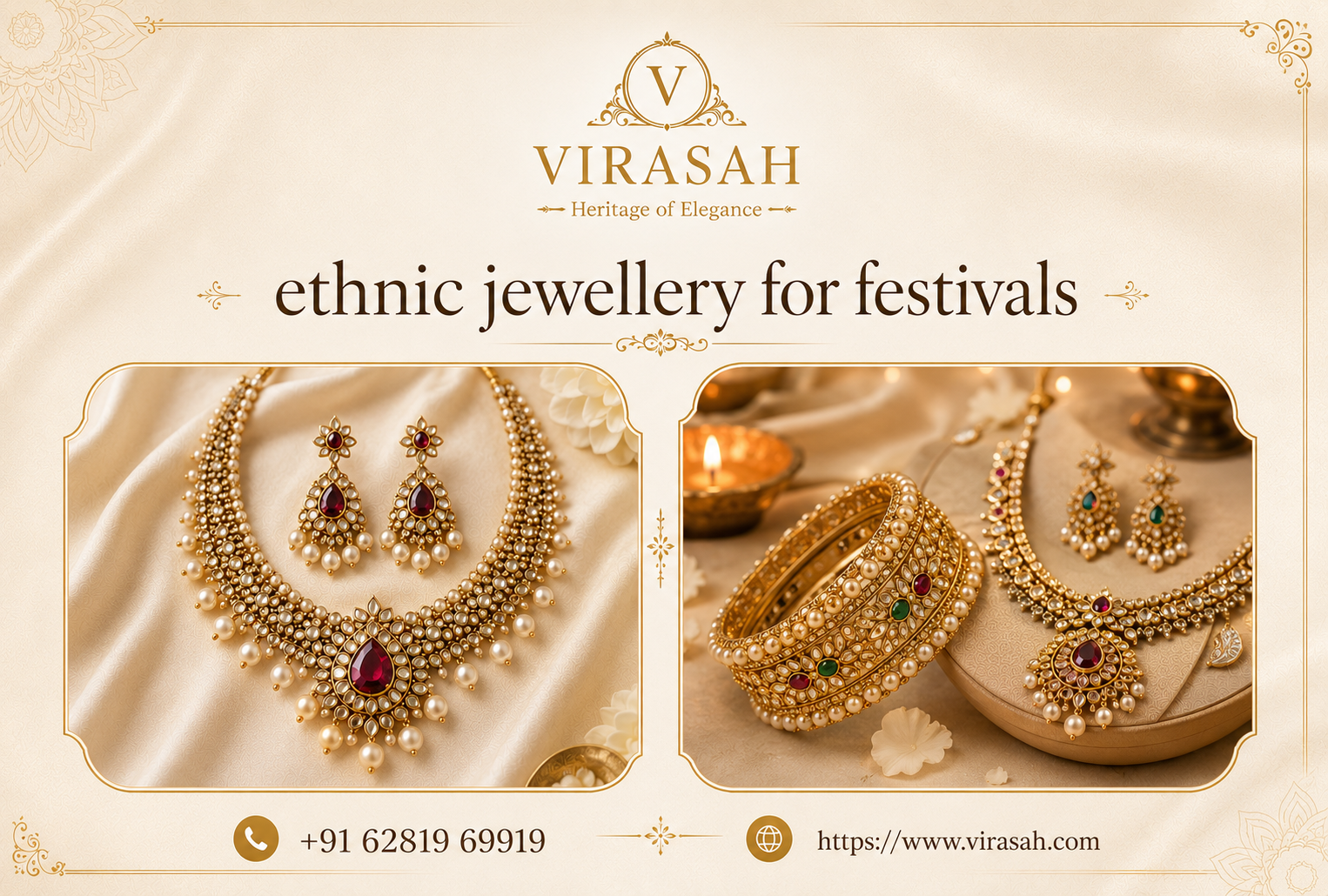
Why Festive Jewellery Deserves Thoughtful Selection
The best ethnic jewellery for festivals supports the outfit instead of competing with it. A high-neck blouse may need statement earrings rather than a large necklace. A deep neckline can carry a layered necklace or pendant. A richly embroidered lehenga often looks more sophisticated with one focal piece, while a plain saree can carry a more elaborate jewellery set.
Festive jewellery also carries cultural meaning. Motifs inspired by flowers, peacocks, temple architecture, leaves, paisleys and traditional stone settings have appeared across Indian design for generations. You can explore the diversity of Indian celebrations through the official Incredible India festivals and events portal .
Popular Jewellery Styles for Indian Celebrations
Kundan-Inspired Jewellery
Kundan-inspired designs are admired for their regal stone settings and luminous appearance. They pair beautifully with silk sarees, lehengas, brocade suits and embroidered anarkalis. Choose a choker for a structured neckline or a longer necklace for a flowing outfit.
Temple-Inspired Jewellery
Temple-inspired pieces commonly feature warm gold tones, sculptural motifs and rich detailing. They complement Kanjeevaram sarees, Banarasi silk, handloom outfits and traditional hairstyles decorated with fresh flowers.
Oxidised Jewellery
Oxidised earrings, necklaces, rings and bangles offer a relaxed ethnic character. They work beautifully with cotton sarees, block-printed kurtas, mirror-work outfits and colourful Navratri clothing.
Pearl and Polki-Inspired Pieces
Pearls soften ornate designs and produce an elegant finish, while polki-inspired settings introduce vintage grandeur. These combinations are suitable when you want a sophisticated look without excessive shine.
How to Match Jewellery with Your Festive Outfit
When selecting ethnic jewellery for festivals, begin with the outfit rather than the accessory. Observe the garment’s dominant colour, secondary embroidery colour, neckline, sleeve length and overall visual weight.
Gold-toned jewellery naturally complements warm shades such as maroon, mustard, red, rust, bottle green and cream. Silver-toned or oxidised pieces pair well with indigo, black, white, turquoise, magenta and textured handloom fabrics.
| Outfit Style | Recommended Jewellery | Styling Approach |
|---|---|---|
| Silk Saree | Temple-inspired necklace, jhumkas and bangles | Use warm gold tones and keep the overall design traditional. |
| Embroidered Lehenga | Choker, matching earrings and maang tikka | Choose one statement area and keep the remaining pieces balanced. |
| Cotton or Handloom Saree | Oxidised necklace, studs or medium-sized jhumkas | Focus on texture, regional craft and comfortable proportions. |
| Anarkali Suit | Long earrings, layered necklace or pendant | Follow the long and graceful vertical flow of the outfit. |
| Simple Kurta Set | Statement earrings, decorative ring and slim bangles | Allow one bold accessory to elevate the minimal outfit. |
Choose One Clear Focal Point
A polished festive look usually has one dominant element. If your necklace is wide, detailed and stone-heavy, select earrings that repeat its design without matching its scale. If you wear oversized chandbalis or jhumkas, consider skipping the necklace and adding only bangles and a ring.
This approach makes ethnic jewellery for festivals appear intentional and gives every selected piece enough visual space to be noticed. It also prevents your jewellery, embroidery, hairstyle and makeup from competing with one another.
Styling Jewellery for Different Festivals
Diwali
Diwali dressing often includes silk, brocade, zari, sequins and rich festive colours. A traditional necklace with matching earrings works well for family gatherings, while a statement choker can enhance an evening look. Learn more about the celebration through the official Incredible India Diwali guide .
Navratri and Dussehra
Navratri outfits are energetic, colourful and designed for movement. Lightweight oxidised jewellery, layered necklaces, mirror-work accessories and secure earrings are practical choices. Avoid pieces that can easily catch on a dupatta during garba or dandiya.
More cultural information is available on the official Navratri information page .
Eid and Family Celebrations
For graceful shararas, ghararas, anarkalis and embroidered suits, pearl-detailed necklaces, refined chandbalis, delicate bangles and elegant rings create a sophisticated finish. The official tourism portal also provides an overview of Eid-ul-Fitr traditions .
Holi and Daytime Events
For Holi or relaxed daytime gatherings, choose simple, secure and easy-to-clean accessories. Avoid delicate finishes that could be affected by colour, moisture, perfume or vigorous movement. Cultural information is also available through the official Holi festival page .
Comfort Matters as Much as Appearance
Even the most beautiful ethnic jewellery for festivals will not feel special if it causes discomfort. Check the earring weight, closure security, necklace flexibility, sharp edges, bangle size and skin contact before attending the event.
Wear the complete set at home for at least fifteen minutes. Move your head, raise your arms, sit down and check whether the jewellery remains comfortable with your hairstyle and dupatta. For heavier earrings, use supportive backs and keep a small jewellery pouch in your handbag.
How to Build a Versatile Festive Jewellery Collection
A practical jewellery collection does not require dozens of similar sets. Begin with a versatile gold-toned necklace and earrings, one pair of classic jhumkas, coordinating bangles, an elegant ring and one silver-toned or oxidised statement piece.
Explore curated designs and festive styling inspiration at Virasah. A thoughtfully selected piece should work with multiple outfits, suit more than one occasion and still feel distinctive. This makes ethnic jewellery for festivals a meaningful part of your wardrobe rather than a one-event purchase.
Check Materials, Finish and Product Details
Before purchasing jewellery, review the product description, measurements, closure type, base material, plating information, stone details, weight, care guidance and return terms. These details help you understand how the accessory may look, feel and fit.
For precious-metal jewellery, consumers can learn about purity marking and verification through the official Bureau of Indian Standards hallmarking overview .
Product photographs should be viewed carefully because screen brightness and colour settings can affect how stones and metallic tones appear. Measurements are equally important because a necklace shown in a close-up photograph may sit differently depending on neck size and the length of its extension chain.
Jewellery Care After the Celebration
Proper care helps ethnic jewellery for festivals retain its beauty. After wearing each accessory, wipe it gently with a clean, soft and dry cloth. Store necklaces flat or individually so their chains do not become tangled.
Keep earrings in pairs, protect stone settings from pressure and separate jewellery pieces to reduce scratching. Avoid direct contact with perfume, hairspray, makeup, moisture and household chemicals. Complete your makeup and fragrance routine before putting on your accessories.
For additional professional guidance, refer to the Gemological Institute of America jewellery-care tips .
Common Festive Jewellery Styling Mistakes
The first mistake is matching every accessory too literally. Your necklace, earrings, bangles, ring, maang tikka and hair accessory do not all need to be equally ornate. Repeating one design element is often enough to connect the complete look.
The second mistake is ignoring neckline proportions. The third is choosing jewellery colour only through exact matching rather than considering contrast. Emerald green, ruby red, pearl white and antique gold can become attractive accents even when they are not the main colours of the garment.
Finally, do not wait until the day of the celebration to test your ethnic jewellery for festivals. Try the complete look in advance, confirm that every closure works, check for loose stones and keep an emergency kit containing safety pins, earring backs, tissues and a soft storage pouch.
Frequently Asked Questions
1. Which jewellery style works with most festive outfits?
A medium-sized gold-toned necklace with matching earrings is highly versatile. It can complement sarees, anarkalis, lehengas and kurta sets without restricting you to one colour palette.
2. Should my jewellery exactly match my outfit colour?
No. Harmonising or contrasting tones often look more refined. Green stones can enrich maroon, cream, mustard and pink outfits, while pearls can soften bold colours and heavy embroidery.
3. Can I mix gold-toned and silver-toned jewellery?
Yes, particularly when the design intentionally combines mixed metallic tones. Keep the shapes, finish or stone colours connected so the complete combination feels coordinated.
4. How do I style jewellery with a heavily embroidered blouse?
Choose statement earrings with a smaller necklace, or skip the necklace entirely. This prevents the heavily detailed neckline from becoming visually crowded.
5. What jewellery is suitable for long festive events?
Choose lightweight earrings, flexible necklaces, secure closures, smooth-edged bangles and pieces that you have tested for comfort before the event.
6. How can I make a simple kurta look festive?
Add one statement element such as chandbalis, a layered necklace or an ornate bangle stack. Complete the outfit with a coordinated dupatta, polished hairstyle and festive footwear.
7. How should I store imitation or fashion jewellery?
Keep every piece dry and separate in a soft pouch or lined jewellery box. Protect the accessories from moisture, perfume, direct sunlight and friction with other jewellery.
8. Is a complete matching jewellery set always necessary?
No. Mixing complementary pieces can create a more personal appearance. Repeat one feature, such as pearl drops, an antique gold finish or a shared stone colour, to connect the accessories.
Celebrate Your Personal Style with Virasah
The ideal ethnic jewellery for festivals should help you feel confident, comfortable and connected to the celebration. Focus on proportion, craftsmanship, colour harmony and wearability.
Whether your style is regal, minimal, vintage-inspired or contemporary, thoughtful jewellery choices can transform your festive wardrobe and create memorable looks that you will enjoy wearing again.
Contact Virasah
Phone: +91 62819 69919
Website: www.virasah.com