Diamond Jewellery Sets for Brides: Designs, Styling and Buying Tips
A bridal jewellery decision is rarely about sparkle alone. The right Diamond Jewellery Sets should complement the wedding outfit, face shape, neckline, ceremony, photographs and the bride’s personal style. For many Indian brides, Diamond Jewellery Sets are also meaningful heirloom purchases, which makes quality, craftsmanship and long-term wearability just as important as the wedding-day look.
This guide explains how to compare Diamond Jewellery Sets, how to style Diamond Jewellery Sets with lehengas and sarees, how to understand diamond quality, and what to check before paying for Diamond Jewellery Sets. Whether you prefer minimal elegance or a grand layered bridal look, the best Diamond Jewellery Sets should feel balanced, comfortable and unmistakably yours.
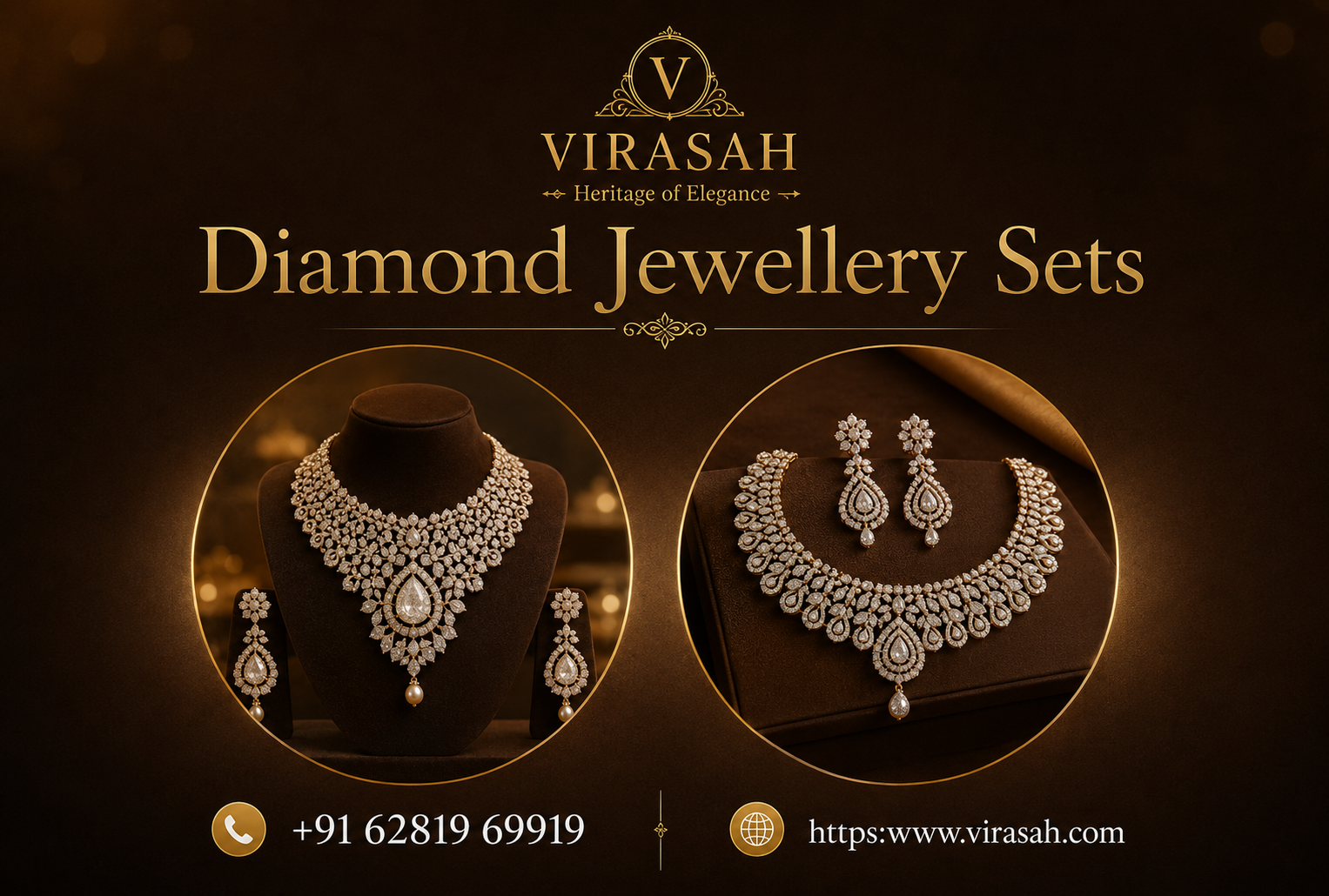
Why Brides Choose Diamond Jewellery Sets
Diamonds work beautifully across classic and contemporary wedding wardrobes. Diamond Jewellery Sets can be paired with red bridal lehengas, ivory ensembles, pastel reception gowns, Banarasi sarees and modern cocktail looks. Because of their neutral brilliance, Diamond Jewellery Sets also combine well with emeralds, rubies, sapphires and pearls.
How to Choose Bridal Jewellery According to Your Wedding Outfit
Bridal jewellery should be selected only after considering the final wedding outfit, blouse neckline, embroidery pattern, fabric colour and overall wedding theme. A jewellery piece that looks beautiful on its own may not always complement a heavily embroidered lehenga or saree. The best styling approach is to create visual balance between the outfit and the accessories.
Brides wearing heavily embellished outfits can choose cleaner necklace silhouettes and moderately sized earrings. On the other hand, simple or monochrome outfits provide more freedom to experiment with statement necklaces, layered designs or jewellery featuring coloured gemstones.
Jewellery for Red Bridal Lehengas
Red remains one of the most popular bridal colours in Indian weddings. White diamonds can create a striking contrast against deep red fabrics, while emerald or ruby accents can add additional richness. Brides should also consider the colour of zari work, embroidery and blouse detailing before selecting the metal tone and gemstone accents.
Jewellery for Pastel Bridal Outfits
Pastel pink, ivory, champagne, peach and powder blue bridal outfits pair beautifully with refined jewellery designs. Softer colour palettes often allow diamonds to become the main visual highlight without making the overall appearance feel too heavy.
Jewellery for Traditional Sarees
Brides wearing Kanjeevaram, Banarasi, Paithani or other traditional sarees can combine contemporary diamond jewellery with classic styling. Floral patterns, symmetrical layouts and gemstone centrepieces can help bridge traditional clothing with modern jewellery.
Understanding the Importance of Necklace Length
Necklace length has a major influence on the overall bridal appearance. A necklace that ends at the wrong point can clash with blouse embroidery or make the neckline look crowded. Brides should therefore test different lengths before finalising their jewellery.
| Necklace Style | Approximate Position | Best Suited For |
|---|---|---|
| Collar Necklace | Sits high around the neck | Deep necklines and off-shoulder blouses |
| Choker | Close to the base of the neck | Lehengas, gowns and reception outfits |
| Princess Length | Falls below the collarbone | Most saree and lehenga necklines |
| Long Necklace | Extends towards the upper chest | Layered traditional bridal styling |
How Face Shape Can Influence Jewellery Selection
Face shape can help brides choose earrings and necklace patterns that create better visual proportion. While there are no strict rules, understanding balance can make jewellery selection easier.
Round Face
Brides with round facial features can experiment with longer earrings, teardrop shapes and vertical jewellery patterns. These designs can create the impression of additional length.
Oval Face
Oval faces are generally versatile and work with many earring shapes, including chandeliers, studs, drops and structured designs. Brides can focus more on coordinating the jewellery with the outfit and hairstyle.
Square Face
Curved earrings, rounded necklace motifs and softer jewellery shapes can balance stronger jawlines. Circular or floral designs may create a softer visual effect.
Heart-Shaped Face
Earrings that become wider towards the bottom, such as teardrop or chandelier designs, can work beautifully with heart-shaped faces. Rounded necklace patterns can also create balance.
Why Bridal Jewellery Should Be Selected with the Hairstyle
Hairstyle changes how earrings, necklaces and head jewellery appear in photographs. Brides wearing open hair may prefer earrings with enough length or sparkle to remain visible. Brides choosing buns or tied hairstyles can experiment with broader earrings, statement studs and decorative hair accessories.
It is helpful to attend at least one jewellery trial while wearing a hairstyle similar to the planned wedding style. This makes it easier to understand how earrings frame the face and whether additional accessories are necessary.
Day Wedding vs Evening Wedding Jewellery
Lighting conditions can significantly change how jewellery appears. Day weddings usually feature strong natural light, while evening weddings rely on warm decorative lighting, stage lights and photography flashes.
For Day Weddings
- Choose refined brilliance instead of excessively reflective designs.
- Pastel gemstone accents can work beautifully in natural light.
- Consider softer necklace silhouettes for daytime ceremonies.
- Check how the jewellery appears outdoors before the wedding.
For Evening Weddings
- Statement necklaces can create stronger visual impact.
- Layered designs often photograph beautifully under stage lighting.
- Contrasting gemstones can add depth to darker reception outfits.
- Make sure reflective surfaces do not overwhelm the facial features in flash photography.
How to Build a Coordinated Bridal Jewellery Look
A coordinated bridal look does not require every accessory to have exactly the same motif. Instead, brides can connect different pieces using repeated design elements such as floral shapes, geometric patterns, gemstone colours or metal tones.
For example, a necklace featuring emerald accents can be paired with earrings that contain smaller emerald details rather than an identical pattern. This creates visual consistency without making the jewellery appear overly matched.
Should Brides Choose Matching or Contrast Jewellery?
Both matching and contrast styling can work beautifully. The right approach depends on the outfit and the desired bridal aesthetic.
Matching Jewellery
Matching gemstone colours with outfit embroidery creates a harmonious and elegant look. This approach works especially well for traditional weddings where the bride prefers a refined and coordinated appearance.
Contrast Jewellery
Contrast styling creates a stronger visual statement. Emerald green stones with red or ivory outfits, for example, can immediately draw attention to the jewellery. Contrast colours are particularly effective when the outfit itself has a relatively simple palette.
Important Questions to Ask Before Purchasing Bridal Jewellery
Bridal jewellery is often a significant purchase, so buyers should ask detailed questions before confirming an order. Transparent information helps make comparisons easier and can reduce confusion later.
- What is the purity of the gold or other precious metal?
- What is the total diamond weight?
- Are any coloured gemstones included?
- Are the diamonds natural or laboratory-grown?
- Is independent grading documentation available where applicable?
- Are making charges mentioned separately?
- Can the necklace length be adjusted?
- What after-sales services are available?
- What is the exchange or return policy?
- How should the jewellery be cleaned and stored?
Understanding Jewellery Pricing
Bridal jewellery pricing can depend on several components rather than one single factor. Buyers should understand how the final amount is calculated before comparing different designs.
The overall price can include precious metal value, diamond value, gemstone value, craftsmanship, design complexity, setting work and applicable taxes. Highly detailed handcrafted designs may require more labour than simple machine-produced jewellery.
Why Two Similar Designs Can Have Different Prices
Two necklaces may appear almost identical in photographs but differ substantially in diamond quality, total stone weight, gold purity, craftsmanship and setting technique. Buyers should therefore avoid comparing jewellery based on appearance alone.
Natural Diamonds and Laboratory-Grown Diamonds
Modern jewellery buyers may come across both natural and laboratory-grown diamonds. Although both can have similar physical and optical properties, their origin and market characteristics differ. Buyers should always ask for clear disclosure before purchase.
Independent documentation can provide useful information about a diamond's characteristics. Brides should review such documentation carefully and ask the jeweller to explain any terminology they do not understand.
Importance of Craftsmanship in Bridal Jewellery
Diamond quality is only one part of jewellery selection. Craftsmanship determines how securely the stones are held, how smoothly the jewellery sits on the skin and how refined the final piece looks from different angles.
Brides should inspect the reverse side of necklaces and earrings as carefully as the front. Good finishing usually includes clean edges, secure clasps, properly aligned settings and a comfortable surface that does not scratch the skin or fabric.
How to Check Comfort Before the Wedding
Heavy bridal jewellery may look impressive but can become uncomfortable during long ceremonies. Before purchasing or finalising a design, wear the jewellery for several minutes and move naturally.
- Turn your head from side to side while wearing the earrings.
- Check whether the necklace moves when you sit or stand.
- Make sure clasps do not press against the skin.
- Check whether earrings pull excessively on the earlobes.
- Ensure the jewellery does not catch on dupatta embroidery.
How to Plan Jewellery for Multiple Wedding Functions
Indian weddings often include engagement ceremonies, mehendi, sangeet, haldi, wedding rituals and reception events. Instead of buying a completely different heavy jewellery collection for every function, brides can create a flexible wardrobe that allows selected pieces to be reused.
Engagement
A refined necklace, elegant studs or medium-length earrings can create a polished engagement look without competing with the wedding-day jewellery.
Mehendi
Lighter accessories are often more comfortable for mehendi celebrations because brides may be moving, dancing and interacting with guests for several hours.
Sangeet
Modern chokers, statement earrings and cocktail-style jewellery can complement gowns, lehengas and fusion outfits.
Wedding Ceremony
The main ceremony usually allows for the most elaborate jewellery styling. Brides can use layered necklaces, statement earrings and coordinated accessories while ensuring that the complete look remains balanced.
Reception
Reception styling can be more contemporary. Brides may choose a cleaner necklace silhouette, prominent earrings or a single statement piece to coordinate with gowns and modern sarees.
Benefits of Detachable and Convertible Jewellery
Convertible jewellery is increasingly useful for brides who want greater value from their wedding purchases. Detachable elements can allow one necklace to be worn in several different ways after the wedding.
Some designs allow a pendant to be removed, necklace sections to be shortened or larger earrings to be converted into smaller versions. These features can make elaborate wedding jewellery more practical for future celebrations.
How to Care for Bridal Jewellery Before the Wedding
Jewellery should be stored carefully in the weeks leading up to the wedding. Each piece should ideally have its own compartment or soft pouch to minimise scratches and tangling.
Avoid exposing precious jewellery to perfume, hairspray, makeup, lotions and household cleaning chemicals. During wedding preparation, jewellery should normally be worn after makeup and hairstyling are complete.
How to Store Jewellery After the Wedding
Proper storage helps preserve the appearance and condition of valuable jewellery. Avoid placing multiple pieces together in a single pouch because harder surfaces can scratch softer metals or gemstones.
- Store necklaces flat whenever possible.
- Keep earrings in individual compartments.
- Use soft-lined jewellery boxes.
- Avoid high humidity and direct sunlight.
- Keep invoices and grading documents separately in a secure place.
- Schedule professional inspection if any stone appears loose.
Why Jewellery Trials Are Important
A jewellery trial allows the bride to see the complete look before the wedding day. This is especially useful when multiple accessories, dupattas and hairstyle elements are being worn together.
During the trial, take photographs under both natural and indoor lighting. Review close-up and full-length images to determine whether the jewellery appears balanced in photographs. Sometimes a necklace that looks perfect in a mirror may appear smaller or larger in professional photographs.
Bridal Jewellery Photography Tips
Since jewellery becomes an important part of wedding photography, brides should consider how pieces will appear from multiple angles. Intricate necklaces should sit symmetrically, while earrings should remain visible around the hairstyle.
Discuss jewellery close-up shots with the wedding photographer in advance. Macro photographs of necklaces, earrings, rings and bridal accessories can become beautiful additions to the wedding album.
Traditional vs Contemporary Bridal Styling
| Feature | Traditional Style | Contemporary Style |
|---|---|---|
| Necklace Design | Layered, floral and heritage-inspired | Geometric, minimal and structured |
| Gemstones | Ruby, emerald and colourful accents | White diamonds with selective colour accents |
| Earrings | Long drops and elaborate motifs | Statement studs, hoops and modern drops |
| Best With | Silk sarees and traditional lehengas | Gowns, cocktail sarees and modern lehengas |
How to Create an Heirloom-Worthy Jewellery Collection
Brides who view wedding jewellery as a long-term family purchase should prioritise timeless design, craftsmanship and documentation. Highly trend-driven pieces may feel less versatile over time, while balanced motifs and classic proportions often remain wearable across generations.
Heirloom jewellery can also include personal details such as a favourite gemstone, initials, meaningful motifs or design elements inspired by family jewellery. Thoughtful customisation can make the piece more emotionally significant.
Why Personal Style Should Be the Final Decision Maker
Bridal trends change every season, but the bride's personal style should remain the strongest influence. Someone who normally prefers minimal accessories may feel uncomfortable wearing extremely heavy jewellery simply because it is fashionable.
Similarly, a bride who enjoys traditional statement jewellery should not feel restricted by minimalist trends. The most memorable wedding look usually feels authentic rather than overly influenced by short-term fashion.
Another advantage of Diamond Jewellery Sets is versatility after the wedding. A detachable necklace, lighter earrings or a convertible pendant from Diamond Jewellery Sets can often be worn again for anniversaries, formal dinners and family celebrations. When planned thoughtfully, Diamond Jewellery Sets become more than one-day accessories.
Popular Diamond Jewellery Sets Designs for Brides
1. Classic Diamond Necklace and Earring Sets
Classic Diamond Jewellery Sets usually feature a coordinated necklace and earrings with balanced stone placement. These Diamond Jewellery Sets suit brides who want timeless symmetry and clean brilliance without too many coloured elements. For traditional bridal wear, Diamond Jewellery Sets with graduated motifs create a graceful frame around the neckline.
2. Choker-Style Diamond Jewellery Sets
Choker Diamond Jewellery Sets sit closer to the neck and work especially well with deep necklines, off-shoulder blouses and structured bridal outfits. Brides can wear choker Diamond Jewellery Sets alone for a refined look or layer choker Diamond Jewellery Sets with a longer necklace for added drama.
3. Layered Bridal Diamond Jewellery Sets
Layered Diamond Jewellery Sets are ideal when the wedding outfit has a broad neckline or when the bride wants a royal appearance. A shorter necklace paired with a long diamond haar creates dimension. When selecting layered Diamond Jewellery Sets, make sure each layer has a different length so the design remains visually clear.
4. Emerald, Ruby or Sapphire Accent Diamond Jewellery Sets
Colour-accented Diamond Jewellery Sets can connect the jewellery with embroidery, borders or gemstone details in the outfit. Emerald-accented Diamond Jewellery Sets look striking with ivory, gold and deep red clothing, while ruby-accented Diamond Jewellery Sets bring warmth to traditional bridal palettes. Sapphire-accented Diamond Jewellery Sets can create an elegant evening or reception look.
Brides exploring coloured stones can also read Virasah’s guides to emerald jewellery for weddings, ruby jewellery, and sapphire jewellery. These references can help you decide whether gemstone-accented Diamond Jewellery Sets fit your bridal palette.
5. Contemporary Minimal Diamond Jewellery Sets
Not every bride wants heavy jewellery. Minimal Diamond Jewellery Sets with fine lines, geometric motifs or delicate diamond clusters work well for engagement ceremonies, registry weddings, cocktail events and receptions. These Diamond Jewellery Sets are also easier to restyle after the wedding.
How to Style Diamond Jewellery Sets with Bridal Outfits
The strongest bridal styling starts with proportion. Before choosing Diamond Jewellery Sets, look at the blouse neckline, embroidery density, dupatta placement and hairstyle. If the outfit is heavily embellished near the neck, simpler Diamond Jewellery Sets can prevent the overall look from appearing crowded. If the neckline is open and the fabric is understated, more elaborate Diamond Jewellery Sets can become the visual focus.
| Bridal Outfit | Recommended Style | Styling Direction |
|---|---|---|
| Heavy red lehenga | Layered Diamond Jewellery Sets | Use one statement necklace and controlled earrings. |
| Ivory or pastel lehenga | Emerald-accent Diamond Jewellery Sets | Add colour while preserving a soft luxury look. |
| Silk saree | Classic Diamond Jewellery Sets | Choose traditional motifs with a defined centrepiece. |
| Reception gown | Modern Diamond Jewellery Sets | Use clean lines, a choker or a refined necklace set. |
Match Diamond Jewellery Sets to Your Neckline
For a deep V-neck blouse, V-shaped Diamond Jewellery Sets can follow the same visual line. For a sweetheart neckline, rounded Diamond Jewellery Sets often feel harmonious. High-neck blouses may need lighter Diamond Jewellery Sets or statement earrings rather than a heavy necklace. The goal is to leave enough visual space for both the fabric and Diamond Jewellery Sets to be appreciated.
Balance Earrings with Diamond Jewellery Sets
If the necklace in your Diamond Jewellery Sets is very elaborate, medium-length earrings may create better balance than oversized drops. If your Diamond Jewellery Sets feature a lighter necklace, dramatic earrings can become the focal point. Try the full combination together before the wedding rather than judging each component separately.
Understand Diamond Quality Before Buying Diamond Jewellery Sets
When comparing Diamond Jewellery Sets, ask for clear information about the diamonds used. The commonly used quality framework is the 4Cs: cut, colour, clarity and carat weight. The Gemological Institute of America 4Cs resource explains these quality factors, while the GIA diamond grading overview provides useful information about independent diamond grading. Diamond Jewellery Sets containing many smaller stones may be documented differently from jewellery featuring one large centre stone, so ask exactly what certification or quality documentation applies.
Cut has a strong effect on how lively diamonds appear in Diamond Jewellery Sets. Colour describes how much body colour is visible in standard diamond grading, while clarity considers internal and external characteristics. Carat measures weight, not visual size by itself. For bridal Diamond Jewellery Sets, the overall layout, matching of stones, setting quality and craftsmanship can be as important visually as individual specifications.
Natural, Laboratory-Grown and Disclosure Questions
Before finalising Diamond Jewellery Sets, ask the jeweller to state clearly whether the diamonds are natural or laboratory-grown and whether treatments or other relevant disclosures apply. The Federal Trade Commission Jewelry Guides provide useful consumer information about jewellery descriptions. The CIBJO Diamond Terminology Guideline is another useful industry reference. For additional buyer education, visit IGI Consumer Education.
Clear disclosure matters because two Diamond Jewellery Sets can look similar in photographs while differing significantly in diamond origin, quality, metal weight, craftsmanship and price structure. Good buying decisions begin with transparent specifications for Diamond Jewellery Sets.
Buying Tips for Diamond Jewellery Sets
Set the Complete Bridal Jewellery Budget
Decide how much of your total wedding jewellery budget should go to Diamond Jewellery Sets. Remember to account for earrings, bangles, rings, maang tikka or other pieces if they are part of the planned look. A clear budget makes it easier to compare Diamond Jewellery Sets without being distracted by pieces outside your range.
Check Metal Purity and Net Weight
Ask for the metal purity, gross weight, net metal weight where applicable, diamond weight and gemstone weight for Diamond Jewellery Sets. Understanding the bill structure makes it easier to compare Diamond Jewellery Sets with another design on a like-for-like basis.
Inspect Setting and Finishing
Examine Diamond Jewellery Sets closely for secure prongs, smooth edges, comfortable clasps and an even finish. Bridal Diamond Jewellery Sets may be worn for many hours, so sharp edges or poorly balanced earrings can become uncomfortable. Well-finished Diamond Jewellery Sets should look refined from the front and neat from the reverse.
Try Diamond Jewellery Sets with the Wedding Blouse
A necklace can look very different once paired with the actual neckline. Whenever possible, test Diamond Jewellery Sets with the blouse or a neckline of similar shape. Photograph the Diamond Jewellery Sets from the front, side and seated position to see how they perform in realistic wedding poses.
Ask About Alterations and After-Sales Care
Before buying Diamond Jewellery Sets, ask whether necklace length can be adjusted, earrings can be modified, clasps can be serviced and stones can be checked periodically. After-sales service adds practical value to Diamond Jewellery Sets intended for long-term ownership.
Explore Gemstones That Can Complement Diamond Jewellery Sets
Brides who want more colour can build Diamond Jewellery Sets around a special gemstone. Learn about rare stones through Virasah’s guides to tanzanite jewellery, Burmese ruby, Kashmir sapphire, and rare gemstones in India. These guides are useful when deciding whether coloured accents should be added to Diamond Jewellery Sets.
If you are comparing diamond shapes for Diamond Jewellery Sets, read the Virasah guide to best diamond cuts. Brides planning their complete jewellery wardrobe can also use the wedding jewellery checklist for Indian brides. Together, these resources can help coordinate Diamond Jewellery Sets with rings, earrings and other bridal pieces.
How to Coordinate Bridal Jewellery Without Over-Styling
A common challenge for brides is deciding how many jewellery pieces should be worn together. When Diamond Jewellery Sets already include a statement necklace and large earrings, adding multiple equally bold accessories may make the bridal look feel visually crowded.
Instead, create a hierarchy. Allow one part of your Diamond Jewellery Sets to act as the main focal point. If the necklace is highly detailed, consider keeping the earrings slightly lighter. If the earrings are dramatic, Diamond Jewellery Sets with a cleaner neckline can create stronger visual balance.
Dupatta placement also matters. A dupatta worn over the head can frame Diamond Jewellery Sets differently from a side-draped dupatta. Brides should therefore complete at least one full dress rehearsal with their Diamond Jewellery Sets before the wedding day.
Choosing Diamond Shapes for Bridal Jewellery
Diamond shape can dramatically influence the personality of Diamond Jewellery Sets. Round brilliant diamonds create a classic appearance, while pear, marquise, oval and emerald-cut stones can bring more distinctive geometry.
For traditional Diamond Jewellery Sets, combinations of round and pear-shaped stones can create floral or cascading designs. Contemporary Diamond Jewellery Sets may use emerald-cut or baguette-style stones for cleaner architectural patterns.
Rather than selecting a shape only because it is fashionable, consider whether the arrangement complements the overall structure of your Diamond Jewellery Sets and whether it fits your long-term personal style.
Wedding Ceremony vs Reception Styling
Many brides prefer separate jewellery moods for the ceremony and reception. Traditional Diamond Jewellery Sets with gemstone accents can work beautifully during the main wedding, especially with richly embroidered lehengas or sarees.
For receptions, Diamond Jewellery Sets with cleaner silhouettes, geometric designs and modern chokers can complement gowns, cocktail sarees and contemporary outfits.
If your budget does not allow two completely separate Diamond Jewellery Sets, consider modular or detachable designs. Convertible Diamond Jewellery Sets may allow parts of a necklace to be removed or worn differently, giving the bride multiple styling possibilities from one investment.
Comfort Matters as Much as Appearance
Wedding celebrations can last several hours, which makes comfort an essential consideration when comparing Diamond Jewellery Sets. A necklace that constantly shifts position or earrings that feel excessively heavy can become distracting during ceremonies and photographs.
When trying Diamond Jewellery Sets, wear them for several minutes rather than removing them immediately. Move your head naturally, sit down, stand up and check whether the jewellery remains comfortable.
Well-designed Diamond Jewellery Sets should distribute weight effectively. Ask whether heavy earrings include support mechanisms and whether the necklace has adjustable fastening options.
Common Mistakes to Avoid When Buying Diamond Jewellery Sets
- Choosing Diamond Jewellery Sets only because they look impressive under showroom lighting.
- Buying Diamond Jewellery Sets before confirming the wedding blouse neckline.
- Ignoring the comfort and weight of Diamond Jewellery Sets.
- Comparing Diamond Jewellery Sets only by total carat weight without reviewing other quality factors.
- Not asking for written details about diamonds, gemstones, metal purity and charges in Diamond Jewellery Sets.
- Over-layering Diamond Jewellery Sets with an already heavily embroidered outfit.
- Skipping after-sales questions for high-value Diamond Jewellery Sets.
How Virasah Can Help You Choose Diamond Jewellery Sets
At Virasah, bridal jewellery selection can begin with the bride’s outfit, preferred silhouette, ceremony and desired level of statement. Instead of looking at Diamond Jewellery Sets as isolated products, consider how Diamond Jewellery Sets work with the complete bridal appearance. A well-planned consultation can help narrow Diamond Jewellery Sets by neckline, gemstone accents, scale and styling flexibility.
The best Diamond Jewellery Sets are not necessarily the heaviest. The best Diamond Jewellery Sets are the ones that create proportion, photograph beautifully, feel comfortable and remain meaningful after the wedding. Brides should compare Diamond Jewellery Sets patiently and prioritise transparent product information before making a final decision.
Quick Bridal Checklist for Diamond Jewellery Sets
- Confirm the budget for Diamond Jewellery Sets.
- Choose Diamond Jewellery Sets after finalising the main outfit.
- Review diamond quality information for Diamond Jewellery Sets.
- Confirm metal purity and weights for Diamond Jewellery Sets.
- Check comfort, clasp strength and finishing of Diamond Jewellery Sets.
- Ask about certification or reports relevant to Diamond Jewellery Sets.
- Photograph jewellery sets in lighting similar to the wedding venue.
- Confirm alteration and servicing options for jewellery sets.
- Store jewellery sets separately to reduce scratching and tangling.
- Keep invoices and documentation for jewellery sets safely.
Frequently Asked Questions About Jewellery Sets
1. Which jewellery sets are best for a bridal lehenga?
For a heavily embroidered lehenga, balanced jewellery sets with a defined centrepiece or structured choker often work well. When the neckline is open, layered jewellery sets can create a more regal appearance.
2. Can jewellery sets be worn with a traditional saree?
Yes. Classic jewellery sets can complement silk, Banarasi and reception sarees beautifully. Choose designs and proportions that support the saree border, blouse neckline and overall colour palette.
3. Should brides choose only white diamonds?
No. Bridal jewellery can incorporate emeralds, rubies, sapphires and other gemstones when the colours support the outfit. Gemstone accents are also an effective way to create a distinctive heirloom-inspired appearance.
4. What should I check before paying for bridal jewellery?
Ask for information about the diamonds, gemstones, metal purity, weights, applicable grading documents, making charges, return or exchange conditions and after-sales service.
5. Are heavier jewellery sets always better for weddings?
No. Heavy jewellery can suit grand bridal styling, but comfort and proportion matter more. A lighter design can sometimes appear more sophisticated when the outfit already contains heavy embroidery or embellishment.
6. How early should I buy my bridal jewellery?
Ideally, begin serious jewellery selection after your main bridal outfits and blouse necklines are confirmed. This leaves enough time for customisation, fitting, gemstone changes, matching pieces and final quality checks.
7. How should bridal jewellery be stored after the wedding?
Store each piece separately in a clean, dry jewellery box. Avoid letting diamonds or metal surfaces rub against other jewellery, and follow the cleaning and maintenance instructions supplied by your jeweller.
Final Thoughts
Choosing jewellery sets for a wedding becomes easier when design, outfit coordination, diamond information, craftsmanship, comfort and after-sales support are considered together. Start with your bridal silhouette, shortlist pieces that enhance rather than compete with your outfit, and compare written specifications carefully.
Whether you prefer a classic necklace, sculpted choker, gemstone accents or a modern minimal set, your bridal jewellery should express your personality while remaining practical enough to enjoy after the wedding.
For additional information about responsible practices across the jewellery supply chain, brides and jewellery buyers can also explore the Responsible Jewellery Council standards.
Contact Virasah :
Looking for bridal jewellery sets or personalised jewellery guidance? Explore elegant jewellery designs with Virasah.
Phone: +91 62819 69919
Website: www.virasah.com