Vintage Jewellery Designs: Timeless Pieces Worth Investing In
Jewellery has always been more than decoration. A thoughtfully made piece can preserve craftsmanship, history, family memories and an individual sense of style for decades. This enduring appeal explains why Vintage Jewellery Designs continue to attract collectors, brides, gemstone enthusiasts and people searching for jewellery that feels different from mass-produced fashion.
The appeal of Vintage Jewellery Designs lies in their ability to combine beauty with character. Instead of being shaped entirely by a temporary trend, vintage-inspired pieces often borrow from established design periods, traditional techniques, old gemstone cuts and carefully considered proportions. They can therefore remain wearable long after a seasonal trend disappears.
For buyers exploring Vintage Jewellery Designs, however, appearance should never be the only consideration. Gemstone quality, metal purity, craftsmanship, condition, provenance, treatment disclosure and suitability for regular wear can all influence whether a piece becomes a meaningful long-term possession.
This detailed guide from Virasah explains what makes Vintage Jewellery Designs distinctive, which periods continue to influence modern jewellery, what gemstones work particularly well in heritage-inspired pieces, how to examine quality and how to approach jewellery purchases with a collector's mindset rather than focusing only on fashion.
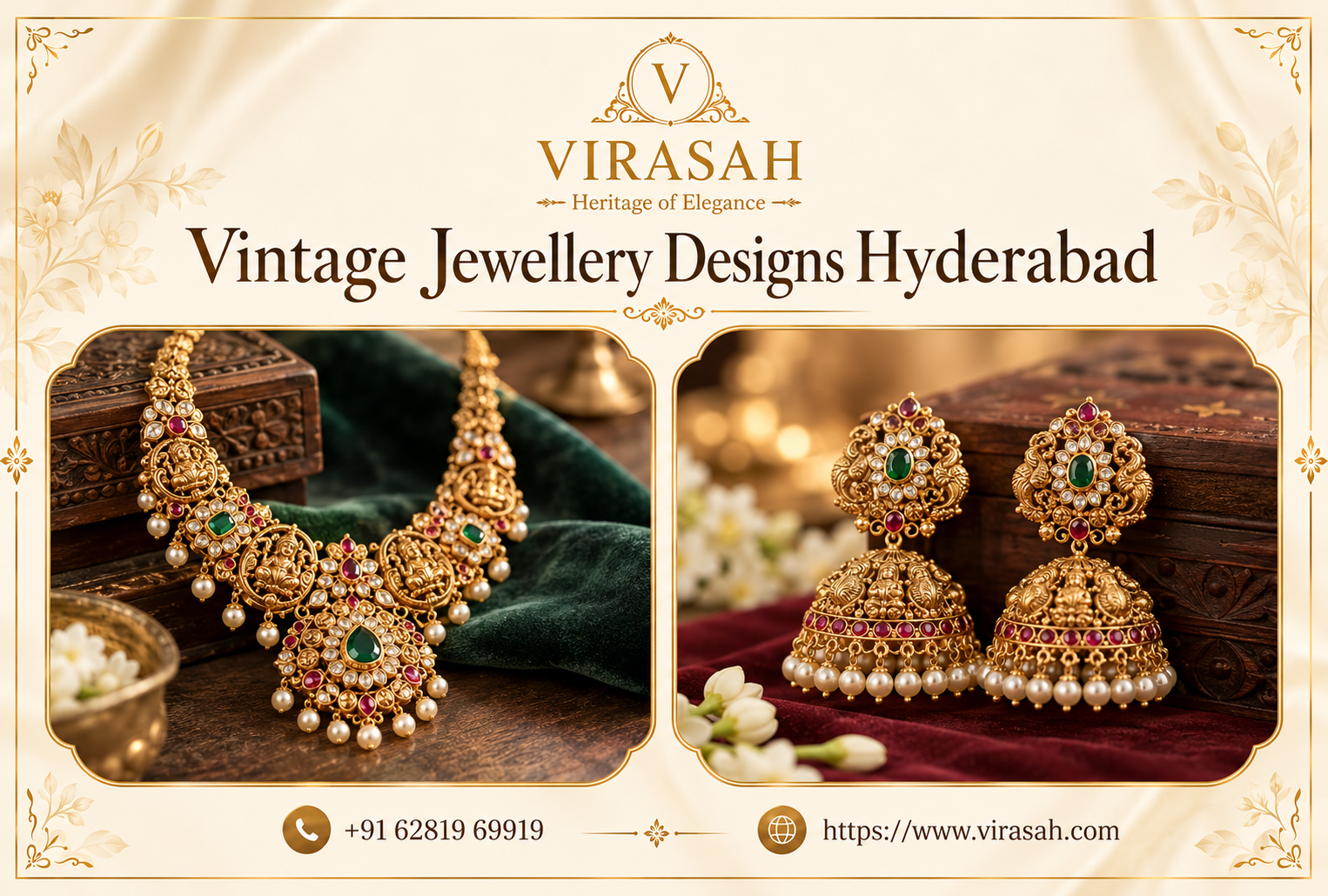
What Are Vintage Jewellery Designs?
The term Vintage Jewellery Designs can describe genuine jewellery from previous decades as well as newly created pieces that intentionally reference historical design languages. The exact use of the word “vintage” varies within the jewellery trade, so buyers should always distinguish between an authentic period piece, a later reproduction and a contemporary vintage-inspired creation.
Authentic Vintage Jewellery Designs may display construction techniques, stone cuts, settings and decorative motifs characteristic of the period in which they were created. A contemporary interpretation, meanwhile, may use modern manufacturing methods while incorporating visual elements associated with Victorian, Edwardian, Art Nouveau, Art Deco, Retro or mid-century jewellery.
Neither category is automatically superior. Collectors interested in history may prefer authentic period jewellery, while buyers who want stronger clasps, contemporary sizing and easier maintenance may choose newly produced Vintage Jewellery Designs.
The most compelling Vintage Jewellery Designs tend to feel intentional. Every stone, curve, engraving and proportion contributes to a complete composition rather than simply following what happens to be fashionable at the moment.
Why Vintage Jewellery Continues to Fascinate Collectors
There is a reason Vintage Jewellery Designs continue returning to contemporary collections. Fine jewellery has always communicated more than financial value. It can represent relationships, milestones, cultural influences, artistic movements and personal identity.
When collectors examine Vintage Jewellery Designs, they are often attracted to characteristics that modern mass-market jewellery does not always prioritise: hand finishing, intricate stone setting, unusual proportions, engraved surfaces, distinctive gemstone combinations and small decorative details that reward close inspection.
Historical jewellery also reminds us that jewellery design evolves alongside architecture, clothing, art and technology. The Victoria and Albert Museum's extensive history of jewellery demonstrates how materials, techniques and decorative preferences have repeatedly changed across centuries. That history helps explain why Vintage Jewellery Designs can look recognisable yet distinctly different from contemporary minimalism.
Distinctive Character
Vintage Jewellery Designs frequently feature details such as milgrain edges, hand engraving, filigree, geometric arrangements, floral forms and old-style gemstone cuts. These elements help jewellery develop visual identity.
Craftsmanship
Well-made Vintage Jewellery Designs can demonstrate considerable jewellery-making skill. Construction quality should still be evaluated individually because age alone never guarantees superior workmanship.
Gemstone Interest
Rubies, sapphires, emeralds, diamonds and unusual coloured stones can make Vintage Jewellery Designs particularly attractive to gemstone collectors.
Personal Expression
Because Vintage Jewellery Designs are less dependent on current fashion cycles, they can be an appealing choice for buyers who prefer jewellery with a strong individual personality.
The Major Jewellery Eras That Continue to Inspire Designers
Victorian Jewellery
Victorian influence remains important in Vintage Jewellery Designs. Jewellery associated with the long Victorian era can range from romantic floral pieces to elaborate gemstone arrangements and darker mourning jewellery. Lockets, brooches, detailed gold work, symbolic motifs and sentimental jewellery all became important forms.
Modern Vintage Jewellery Designs inspired by this period may include richly coloured gemstones, engraved gold, floral settings, halos and romantic motifs. These designs can work particularly well for pendants, cocktail rings, earrings and heirloom-style bridal jewellery.
Edwardian Jewellery
Edwardian-inspired Vintage Jewellery Designs tend to feel lighter and more delicate. Platinum jewellery, lace-like structures, diamonds and finely detailed settings are closely associated with the elegant aesthetic of the early twentieth century.
When reproduced successfully, Edwardian-style Vintage Jewellery Designs create visual intricacy without looking excessively heavy. Fine lines, bows, garlands and symmetrical compositions can make them attractive for formal occasions.
Art Nouveau Jewellery
Art Nouveau introduced a dramatically different approach. Rather than treating gemstones as the only source of value, designers frequently emphasised shape, imagination, nature and unusual materials. The V&A describes Art Nouveau jewellery as characterised by flowing forms and nature-inspired imagery, with important artists experimenting with materials such as enamel, horn and glass.
Contemporary Vintage Jewellery Designs influenced by Art Nouveau commonly use flowers, leaves, insects, birds and flowing asymmetrical lines. This makes the style particularly appropriate for collectors who view jewellery as wearable art rather than simply a display of gemstone size.
Art Deco Jewellery
Few historical styles remain as immediately recognisable as Art Deco. Geometric arrangements, strong symmetry, architectural lines and high-contrast gemstone combinations give Art Deco-inspired Vintage Jewellery Designs a sophisticated appearance.
The V&A notes that jewellery of the Art Deco period embraced sharp geometric patterns and dense gemstone arrangements. These visual qualities still translate beautifully into modern Vintage Jewellery Designs, especially diamond rings, sapphire-and-diamond pieces, emerald jewellery, bracelets and statement earrings.
Retro and Mid-Century Jewellery
Later Vintage Jewellery Designs may favour larger gold surfaces, sculptural forms, dramatic curves and jewellery that creates impact even without exceptionally large gemstones. These pieces can provide a useful bridge between antique-inspired ornamentation and modern statement jewellery.
Vintage Jewellery Designs and the Importance of Gemstones
Gemstones frequently determine the personality of Vintage Jewellery Designs. While diamonds remain important, coloured gemstones can introduce depth, history and individuality that is difficult to achieve through metalwork alone.
The most attractive gemstone-based Vintage Jewellery Designs achieve balance. A rare gemstone deserves attention, but an excellent design should enhance the stone rather than allowing size alone to dominate the piece.
Ruby Vintage Jewellery Designs
Ruby works beautifully in Vintage Jewellery Designs because its red colour creates immediate contrast with yellow gold, white metals and diamonds. Cabochon rubies can produce an older, softer aesthetic, while faceted rubies create greater brilliance.
Buyers should assess colour, clarity, cut, origin claims and treatment disclosures rather than assuming that every deep-red stone has comparable quality. Readers considering ruby-centred Vintage Jewellery Designs can explore Virasah's detailed guide to ruby jewellery, quality and buying considerations.
For collectors particularly interested in origin, the guide to Burmese ruby provides additional context about why certain ruby sources have historically attracted significant attention.
Sapphire Vintage Jewellery Designs
Sapphire is another natural companion to Vintage Jewellery Designs. Blue sapphire with diamonds is among the most established combinations, but sapphires also occur in many other colours.
The deeper tones of sapphire can complement geometric settings, floral compositions and heritage-inspired rings. Before purchasing sapphire Vintage Jewellery Designs, examine colour distribution, transparency, cut quality and treatment information.
For a broader understanding of selecting sapphires, see Virasah's sapphire jewellery buying guide.
Kashmir Sapphire and Collector Interest
Historical origin can have a major effect on collector interest in exceptional gemstones. Kashmir sapphires are particularly famous within the gemstone world. However, origin should never be accepted purely from visual appearance or a sales description.
When significant value depends on a gemstone's claimed origin, independent laboratory documentation can become especially important. Anyone considering rare sapphire Vintage Jewellery Designs can read the Virasah guide explaining Kashmir sapphire rarity and value factors.
Emerald Vintage Jewellery Designs
Emerald has an unmistakable presence in Vintage Jewellery Designs. Its green colour works particularly well with yellow gold, diamonds and heritage Indian jewellery influences.
Emeralds typically contain inclusions, so buyers should not judge them using exactly the same expectations applied to diamonds. Colour, transparency, overall beauty, treatment and durability of the setting should be examined together.
For inspiration, see Virasah's collection-focused article covering emerald jewellery for weddings and special occasions. Many of the principles discussed there can help buyers evaluate emerald-centred Vintage Jewellery Designs.
Tanzanite in Vintage-Inspired Jewellery
Tanzanite is much younger in jewellery history than ruby, sapphire or emerald, yet its distinctive blue-violet colour can work effectively in contemporary Vintage Jewellery Designs.
A designer may combine an antique-inspired setting with a comparatively modern gemstone to create something that feels familiar without becoming a direct reproduction. Buyers interested in this approach can read Virasah's tanzanite jewellery buying guide.
Diamonds in Vintage Jewellery Designs
Diamonds have played a major role in many celebrated Vintage Jewellery Designs, but vintage character does not necessarily require the modern round brilliant appearance that dominates much contemporary jewellery.
Older jewellery may contain cuts with different facet patterns and proportions. Their beauty can be softer, broader and less uniform than modern precision-cut diamonds. This distinction is one reason genuine period jewellery can have such a recognisable personality.
Contemporary Vintage Jewellery Designs can reproduce that mood using carefully selected diamond shapes and settings. Cushion cuts, emerald cuts, Asscher-style cuts, oval diamonds and other shapes can all complement heritage aesthetics when proportioned thoughtfully.
Before selecting a diamond for Vintage Jewellery Designs, understand how cut affects appearance. Virasah's guide to the best diamond cuts for engagement rings provides useful comparisons.
Indian Heritage and Vintage Jewellery Designs
India's jewellery heritage provides an enormous source of inspiration for Vintage Jewellery Designs. Jewellery has historically played ceremonial, cultural, decorative and social roles across different regions and communities, producing an extraordinary variety of forms.
Traditional necklaces, elaborate earrings, gemstone rings, bangles and bridal ornaments can inspire contemporary Vintage Jewellery Designs without requiring exact duplication of historical pieces.
Indian jewellery is also deeply connected with coloured gemstones. Ruby, sapphire, emerald, diamond, pearl and numerous other stones have appeared in important jewellery traditions. Modern buyers interested in exploring stones beyond familiar choices can consult Virasah's guide to rare gemstones in India.
For weddings, Vintage Jewellery Designs can provide an alternative to pieces chosen purely because they are currently fashionable. A bride might select one heritage-style necklace, a pair of statement earrings or an heirloom-inspired ring that can later be worn independently.
The Virasah Indian bridal jewellery checklist offers additional guidance for coordinating jewellery across wedding events.
How Vintage Jewellery Designs Differ From Modern Minimal Jewellery
| Feature | Vintage Jewellery Designs | Modern Minimal Jewellery |
|---|---|---|
| Design approach | Often decorative, historical and detail-rich | Usually clean, simple and restrained |
| Motifs | Floral, geometric, symbolic, architectural and ornamental | Simple curves, lines and basic geometric forms |
| Gemstone use | Frequently uses elaborate combinations and accent stones | Often highlights one gemstone or a limited arrangement |
| Metalwork | Vintage Jewellery Designs may include engraving, filigree, milgrain and textured surfaces | Polished surfaces and simplified construction are common |
| Visual impact | Layered, distinctive and expressive | Quiet, versatile and understated |
| Styling | Often chosen as a focal piece | Frequently suited to everyday layering |
Neither style is inherently better. Many jewellery collections benefit from both. The advantage of Vintage Jewellery Designs is that they can introduce contrast and personality into an otherwise simple wardrobe.
What Makes Vintage Jewellery Designs Worth Collecting?
1. Design That Is Not Entirely Trend-Dependent
A significant advantage of Vintage Jewellery Designs is their relationship with established design traditions. Because the aesthetic has already existed across different generations, a well-proportioned piece may continue feeling relevant even as contemporary trends change.
2. Craftsmanship You Can Examine
Fine Vintage Jewellery Designs reward close inspection. Look underneath a ring, at the back of a pendant and around the joints of a bracelet. Good jewellery should demonstrate care beyond the surfaces immediately visible when worn.
3. Scarcity and Individuality
Authentic vintage pieces can be difficult to replicate exactly. Even newly produced Vintage Jewellery Designs can feel distinctive when they combine handmade work, unusual stones or custom detailing.
4. Gemstone Potential
Some Vintage Jewellery Designs feature gemstones that are themselves of considerable interest. This does not mean every old gemstone is valuable. Identification, treatment, origin and condition still matter enormously.
5. Emotional Longevity
Jewellery that looks intentionally designed may be more likely to remain meaningful. Vintage Jewellery Designs are often chosen for anniversaries, weddings, milestone birthdays and family gifts precisely because they have an heirloom-like character.
How to Evaluate Vintage Jewellery Designs Before Buying
Check Whether the Piece Is Truly Vintage
If a seller describes jewellery as genuinely old, ask what supports that description. Vintage Jewellery Designs can be imitated successfully, meaning style alone may not establish age.
Hallmarks, maker's marks, construction methods, gemstone cuts, historical records and professional assessment may provide useful evidence. For important purchases, independent expertise is particularly valuable.
Examine the Gemstones
When gemstones contribute significantly to the price of Vintage Jewellery Designs, request clear information regarding natural versus laboratory-grown origin and known treatments.
The Gemological Institute of America gemstone resources provide educational information about identifying and evaluating major gemstones.
Inspect the Setting
Even beautiful Vintage Jewellery Designs can become impractical when prongs, bezels, hinges or clasps are weak. Check whether stones move when the piece is handled gently. Examine areas where metal has worn thin.
Look for Repairs
Repair is not automatically negative. Jewellery intended to survive for generations will sometimes require restoration. However, repairs to Vintage Jewellery Designs should ideally preserve structural integrity without unnecessarily erasing historical character.
Confirm Metal Purity
Gold, platinum and silver purity can influence durability, value and maintenance. Hallmarks may provide useful information, although interpretation sometimes requires expertise because marking systems differ by country and historical period.
Understand Condition
A century-old piece cannot always be expected to look factory-new. Collectors of authentic Vintage Jewellery Designs often distinguish attractive age-related character from actual structural damage.
Choosing Vintage Jewellery Designs for Rings
Rings are among the most popular categories for Vintage Jewellery Designs. They allow intricate metalwork and gemstone arrangements to be appreciated closely, making them particularly suitable for engagement, anniversary and statement jewellery.
When buying rings, however, practical considerations matter. Because hands regularly contact desks, doors and other hard surfaces, delicate Vintage Jewellery Designs may require more careful wear.
Check the height of the gemstone setting, strength of the shank and condition of small accent stones. If an authentic ring has already been resized multiple times, additional alteration should be discussed with an experienced jeweller.
Choosing Vintage Jewellery Designs for Necklaces
Necklaces provide designers with greater space for elaborate compositions. As a result, some of the most dramatic Vintage Jewellery Designs appear in collars, pendants and gemstone necklaces.
A vintage-inspired necklace can serve as the central element of an outfit. When assessing these Vintage Jewellery Designs, consider total weight, flexibility, clasp security and how comfortably the piece follows the neckline.
For heavily gem-set necklaces, inspect links and articulation carefully. A necklace may look impressive when placed flat but should also move naturally on the body.
Choosing Vintage Jewellery Designs for Earrings
Earrings allow Vintage Jewellery Designs to combine movement, colour and symmetry. Drop earrings inspired by Edwardian or Art Deco jewellery can frame the face beautifully, while gemstone studs with ornate halos offer a more practical everyday option.
Weight deserves special attention. Elaborate Vintage Jewellery Designs should not become uncomfortable after extended wear. Buyers should also verify that post, clip or screw mechanisms are secure.
Choosing Vintage Jewellery Designs for Bracelets and Bangles
Bracelets expose jewellery to frequent movement, so durability is particularly important. Well-designed Vintage Jewellery Designs should balance visual intricacy with reliable construction.
Check hinges, safety chains, clasps and individual gemstone links. In older Vintage Jewellery Designs, repeated friction can gradually wear connecting points even when the visible front surface remains beautiful.
Can Vintage Jewellery Designs Be Worn Every Day?
Many Vintage Jewellery Designs can be worn regularly, but suitability depends on materials and construction rather than style alone.
Diamond and sapphire pieces in secure settings may tolerate regular wear better than jewellery containing softer or more fragile gemstones. Emerald and tanzanite jewellery, for example, generally deserve more thoughtful handling.
Everyday Vintage Jewellery Designs should ideally have smooth edges, secure clasps and settings that do not catch easily on clothing. Extremely delicate antique pieces may be more suitable for occasional wear.
How to Style Vintage Jewellery Designs With Contemporary Clothing
You do not need an entirely vintage wardrobe to wear Vintage Jewellery Designs. In fact, one of the easiest approaches is to pair an ornate piece with clean contemporary clothing.
A geometric Art Deco-inspired ring can work with formal business clothing. A ruby or emerald pendant can add colour to a simple monochrome outfit. Statement Vintage Jewellery Designs can also complement modern eveningwear because the contrast prevents the overall look from feeling like a historical costume.
Keep One Strong Focal Point
If your necklace is elaborate, use simpler earrings. When wearing highly decorative Vintage Jewellery Designs, allowing one piece to dominate usually creates a more sophisticated composition.
Mix Carefully
There is no absolute rule preventing vintage and contemporary jewellery from being worn together. The key is visual balance. Similar metal tones, repeating gemstone colours or related shapes can help Vintage Jewellery Designs integrate naturally with modern pieces.
Use Colour Strategically
Ruby, emerald and sapphire Vintage Jewellery Designs already provide strong colour. Neutral clothing can allow those stones to become the focal point without visual competition.
Explore More Gemstone and Jewellery Guides From Virasah
If Vintage Jewellery Designs have encouraged you to explore gemstones in greater depth, these Virasah guides can help you understand specific stones and jewellery categories:
- Tanzanite Jewelry: Meaning, Rarity and Buying Guide
- Burmese Ruby: Why It Is One of the World's Most Valuable Gemstones
- Kashmir Sapphire: Why This Rare Gemstone Is So Valuable
- Rare Gemstones in India: Complete Guide for Jewelry Lovers
- Sapphire Jewelry Guide: How to Choose the Perfect Sapphire
- Ruby Jewelry Guide: Meaning, Quality and Buying Tips
- Best Emerald Jewelry Designs for Weddings and Special Occasions
- Best Diamond Cuts for Engagement Rings
- Best Wedding Jewelry for Indian Brides: Complete Checklist
Vintage Jewellery Designs as Heirloom Pieces
The strongest Vintage Jewellery Designs often have qualities associated with heirlooms: durable construction, meaningful materials, balanced proportions and a style that can appeal beyond a single fashion season.
An heirloom does not necessarily need to be exceptionally expensive. A carefully made ring associated with an important family event can become more meaningful than jewellery purchased purely because of its market value.
When choosing Vintage Jewellery Designs with future generations in mind, prioritise repairability. Jewellery that can be maintained by a skilled jeweller is generally easier to preserve than extremely fragile structures or designs dependent on difficult-to-replace components.
Custom-Made Vintage Jewellery Designs
Buyers do not always need to find an original historical piece to enjoy vintage style. Bespoke Vintage Jewellery Designs can combine heritage aesthetics with modern dimensions, gemstone preferences and practical construction.
For example, a customer may appreciate Art Deco geometry but prefer an emerald centre stone in a ring sized specifically for them. Another buyer may like Victorian floral work but want a pendant designed around an existing family gemstone.
Custom Vintage Jewellery Designs also allow contemporary buyers to control metal choice and gemstone documentation while preserving the visual character they admire.
The success of custom Vintage Jewellery Designs depends heavily on proportion. Adding decorative details indiscriminately does not automatically create vintage character. Historical inspiration should guide the design language consistently.
Vintage Jewellery Designs for Indian Weddings
Wedding jewellery is an especially natural setting for Vintage Jewellery Designs. Weddings already carry family traditions, ceremony and memory, making jewellery with a heritage aesthetic particularly appropriate.
A bride does not necessarily need every piece to follow the same period. One statement necklace, a vintage-inspired ring or gemstone earrings can introduce Vintage Jewellery Designs without overwhelming the outfit.
Ruby and emerald combinations work beautifully with many traditional colour palettes, while sapphire and diamond pieces can complement cooler-toned outfits. Diamond-focused Vintage Jewellery Designs can suit receptions and evening celebrations where sparkle becomes more prominent.
Are Vintage Jewellery Designs a Good Investment?
The word “investment” needs careful interpretation when discussing Vintage Jewellery Designs. Jewellery can preserve substantial material and collectible value, but there is no guarantee that every purchase will appreciate.
Factors that may influence the market for Vintage Jewellery Designs include rarity, maker, signed provenance, gemstone quality, historical importance, condition, documentation and current collector demand.
Transaction costs also matter. Retail price, auction commission, dealer margin, restoration expenses, insurance and resale conditions can all affect financial returns.
For this reason, the most sensible approach to Vintage Jewellery Designs is to purchase pieces you would be pleased to own and wear even if short-term market values changed.
A Practical Virasah Buying Principle
When comparing Vintage Jewellery Designs, consider the piece in layers: first design, then gemstone quality, then craftsmanship, then condition and finally documentation. A famous gemstone name or historical-looking setting should never replace a complete evaluation.
Understanding Provenance
Provenance refers to the documented ownership or history of an object. For certain exceptional Vintage Jewellery Designs, reliable provenance can contribute significantly to collector interest.
However, provenance must be supported by evidence. Family stories can be meaningful personally, but claims involving famous owners, historical events or major jewellery houses should ideally have documentation.
When provenance materially affects the price of Vintage Jewellery Designs, ask what records are included with the sale and whether those records independently support the description.
Signed Vintage Jewellery Designs
Jewellery made by historically important maisons or designers can attract strong collector interest. Signed Vintage Jewellery Designs should be assessed for authenticity because a visible signature by itself may not be sufficient proof.
Experts may examine typography, numbering, construction, period-specific techniques and archival information when authenticating important pieces. Buyers considering high-value signed Vintage Jewellery Designs should seek specialist expertise.
Common Mistakes When Buying Vintage Jewellery Designs
Buying Only Because a Piece Looks Old
An aged appearance does not establish authenticity. Modern Vintage Jewellery Designs can intentionally reproduce historical textures and finishes.
Assuming Every Old Gemstone Is Rare
Age alone does not determine gemstone value. Stones in Vintage Jewellery Designs still need to be evaluated for identity, quality and treatments.
Ignoring Structural Condition
A visually beautiful ring with dangerously thin prongs can quickly become an expensive problem. Condition is fundamental when evaluating Vintage Jewellery Designs.
Paying for Origin Without Documentation
Gemstone origin can influence value, particularly for certain rubies and sapphires. If origin is central to the price of Vintage Jewellery Designs, appropriate laboratory documentation deserves careful consideration.
Confusing Emotional Value With Market Value
An heirloom may be priceless to a family while having a much lower resale value. Both forms of value are legitimate, but they should not be confused when comparing Vintage Jewellery Designs.
How to Care for Vintage Jewellery Designs
Appropriate maintenance can significantly extend the life of Vintage Jewellery Designs. Because pieces vary in age, materials and construction, there is no single cleaning method suitable for every item.
Avoid Aggressive Cleaning
Ultrasonic or steam cleaning is not automatically suitable for every gemstone or antique setting. Before cleaning valuable Vintage Jewellery Designs, identify the gemstones and understand any treatments or structural weaknesses.
Store Pieces Separately
Diamonds and other hard gemstones can scratch softer materials. Store Vintage Jewellery Designs individually in soft pouches or separated jewellery-box compartments.
Check Clasps and Prongs
Periodic professional inspection can identify wear before stones become loose. Frequently worn Vintage Jewellery Designs deserve especially close attention around hinges, prongs and clasps.
Avoid Chemicals
Perfume, chlorine, household cleaners and cosmetics can affect metals or gemstones. Put Vintage Jewellery Designs on after applying beauty products and remove delicate jewellery before swimming or heavy household work.
How to Build a Vintage Jewellery Collection Slowly
A thoughtful collection of Vintage Jewellery Designs does not need to be assembled quickly. In fact, slower buying can lead to a more coherent and satisfying collection.
Begin with one category you genuinely enjoy. It might be gemstone rings, Art Deco-inspired earrings or Indian heritage necklaces. Studying a narrower category makes it easier to recognise differences in Vintage Jewellery Designs.
Next, learn about materials. Understanding diamonds, coloured gemstones, gold and platinum improves your ability to judge Vintage Jewellery Designs beyond surface appearance.
Finally, document major purchases. Keep invoices, laboratory reports, photographs and service records together. Good records can make future maintenance, insurance and evaluation of Vintage Jewellery Designs much easier.
Vintage Jewellery Designs for Gifting
Vintage Jewellery Designs can make memorable gifts because they already carry an heirloom-like aesthetic. A pendant, ring or pair of earrings selected around the recipient's taste can feel more personal than a generic fashion accessory.
Birthstones can provide a useful starting point, although buyers should not feel restricted by them. Colour preference and lifestyle often matter more when selecting Vintage Jewellery Designs that will actually be worn.
For milestone gifts, consider engraving where appropriate. A date or discreet message can give newly created Vintage Jewellery Designs a personal history from the moment they are presented.
Vintage Jewellery Designs for Engagement Rings
Engagement rings are a particularly popular application for Vintage Jewellery Designs. Decorative halos, geometric shoulders, milgrain, engraving and coloured centre stones can provide an alternative to conventional solitaire rings.
However, an engagement ring is usually worn frequently. Therefore Vintage Jewellery Designs intended for engagement should be evaluated not only for appearance but also durability.
The ring should protect vulnerable gemstone edges where possible, and decorative details should not make routine maintenance unnecessarily difficult. When selecting authentic antique Vintage Jewellery Designs, have the setting checked before committing to daily wear.
Why Authenticity Matters
There is nothing inherently wrong with reproductions or vintage-inspired jewellery when accurately described. Problems arise when contemporary Vintage Jewellery Designs are represented as historical originals without evidence.
Accurate descriptions allow buyers to decide what matters to them. Someone might prefer a newly made Art Deco-inspired ring because it offers modern sizing and construction, while another collector may value authentic period Vintage Jewellery Designs because of their historical context.
Transparency creates confidence in both situations.
Important Questions to Ask Before Purchasing
- Is this an original period piece or a modern interpretation of Vintage Jewellery Designs?
- What metal has been used and what is its purity?
- Are the gemstones natural, laboratory-grown or imitation?
- Have any gemstones undergone treatments?
- Does the purchase include an independent laboratory report?
- Has the jewellery been repaired or substantially altered?
- Are all clasps, hinges and gemstone settings secure?
- Can these Vintage Jewellery Designs be resized safely if required?
- What maintenance is recommended?
- What documentation accompanies the purchase?
Authoritative Resources for Jewellery Buyers
People researching gemstones and Vintage Jewellery Designs can also consult respected educational, museum and industry resources:
- Gemological Institute of America – Gem Encyclopedia
- Victoria and Albert Museum – A History of Jewellery
- Victoria and Albert Museum – Jewellery Collection
- Gem-A – The Gemmological Association of Great Britain
- CIBJO – The World Jewellery Confederation
- U.S. Federal Trade Commission – Jewelry Guides
These links intentionally do not use the nofollow attribute, allowing them to function as standard do-follow outbound references.
Frequently Asked Questions About Vintage Jewellery Designs
1. What are Vintage Jewellery Designs?
Vintage Jewellery Designs may refer to genuine jewellery made in earlier decades or modern jewellery inspired by historical styles. Victorian, Edwardian, Art Nouveau, Art Deco, Retro and mid-century aesthetics are among the most frequently referenced periods.
2. Are Vintage Jewellery Designs valuable?
The value of Vintage Jewellery Designs varies enormously. Important factors include gemstone quality, precious-metal content, maker, age, condition, rarity, provenance, authenticity and market demand. Simply being old does not guarantee high value.
3. Are Vintage Jewellery Designs a good investment?
Exceptional Vintage Jewellery Designs may retain or increase value, particularly when rarity, important makers or fine gemstones are involved. However, jewellery markets can change and resale expenses matter, so jewellery should not be treated as a guaranteed financial investment.
4. How can I tell whether vintage jewellery is authentic?
Authenticating Vintage Jewellery Designs may involve examining hallmarks, construction, maker's marks, gemstone cuts, metalwork and documentation. High-value pieces should ideally be evaluated by qualified jewellery or gemstone professionals rather than relying only on visual appearance.
5. Which gemstones are best for Vintage Jewellery Designs?
Diamonds, rubies, sapphires and emeralds are classic choices for Vintage Jewellery Designs. Pearls, tanzanite and other coloured gemstones can also work beautifully depending on the historical style being interpreted.
6. Can Vintage Jewellery Designs be worn every day?
Yes, many Vintage Jewellery Designs can be suitable for regular wear when their gemstones and settings are durable. Delicate antique jewellery, high settings and softer gemstones may need more careful handling.
7. What is the difference between antique and vintage jewellery?
In common collecting terminology, “antique” is generally reserved for substantially older jewellery, often pieces more than 100 years old, while “vintage” is used more broadly for jewellery from previous decades. However, terminology varies between sellers, so buyers should ask for the actual estimated date rather than relying only on the label attached to Vintage Jewellery Designs.
8. Which vintage jewellery era is most popular?
Preferences vary, but Art Deco remains especially influential because its geometry translates easily into contemporary rings and earrings. Victorian, Edwardian and Art Nouveau Vintage Jewellery Designs also appeal to collectors who prefer more romantic or organic aesthetics.
9. Can new jewellery have a vintage design?
Absolutely. Modern Vintage Jewellery Designs can reproduce historical aesthetics while benefiting from new metalwork, customised sizing and contemporary quality control. They should simply be described accurately as vintage-inspired rather than represented as original period pieces.
10. Should vintage gemstone jewellery have a laboratory certificate?
A report can be particularly useful when a major part of the price of Vintage Jewellery Designs depends on gemstone identity, treatment or claimed geographic origin. The need for documentation generally increases with the value and rarity of the gemstone.
11. Can old jewellery be redesigned?
Yes, but redesigning important Vintage Jewellery Designs requires care. Altering an original period piece can sometimes reduce its historical or collectible importance. Before making irreversible changes, consider whether repair or sympathetic restoration would preserve more of the original jewellery.
12. How should Vintage Jewellery Designs be stored?
Store Vintage Jewellery Designs separately in soft-lined compartments or individual pouches. Avoid allowing harder gemstones to rub against softer stones, and keep delicate chains or articulated jewellery positioned so they do not become tangled.
Final Thoughts: Choosing Jewellery That Can Outlive Trends
Fashion changes quickly, but excellent jewellery does not need to. The lasting appeal of Vintage Jewellery Designs comes from the combination of artistic identity, gemstone beauty, craftsmanship and historical influence.
The strongest Vintage Jewellery Designs do not simply imitate the past. They reveal why certain proportions, decorative techniques and gemstone combinations have remained appealing across generations.
For collectors, the key is to look beyond surface beauty. Ask about gemstones, examine settings, understand treatments, consider the condition of the metal and request documentation when an important claim materially influences value.
For brides and everyday jewellery lovers, Vintage Jewellery Designs offer another advantage: individuality. They can provide an alternative to jewellery created around short-lived trends and allow personal style to remain central to the purchase.
For families, carefully chosen Vintage Jewellery Designs can also become future heirlooms. The jewellery you purchase today may eventually carry stories that cannot be measured solely by metal weight or gemstone carats.
Whether your preference is Art Deco geometry, Victorian romance, Edwardian delicacy, Indian heritage craftsmanship or a contemporary interpretation of historical jewellery, choose Vintage Jewellery Designs that combine beauty with sound construction and transparent gemstone information.
That approach gives you the best opportunity to own jewellery that remains meaningful long after the moment of purchase.
Discover Fine Jewellery With Virasah:
Explore thoughtfully crafted gemstone jewellery and Vintage Jewellery Designs created for collectors, celebrations, weddings and timeless personal style.
Phone: +91 62819 69919
Website: www.virasah.com