South Indian Bridal Jewellery: Complete Styling and Buying Guide
A South Indian bridal look is instantly recognisable for its richness, heritage-inspired details and beautifully layered jewellery. From temple necklaces and antique-finish gold pieces to diamonds, rubies, emeralds and traditional waist belts, South Indian Bridal Jewellery plays a major role in defining the bride's complete wedding appearance.
However, creating an elegant bridal look is not simply about wearing as much jewellery as possible. The best styling balances the saree, hairstyle, neckline, face shape, wedding traditions and the bride's personality. This guide explains how to select, style and buy South Indian Bridal Jewellery while keeping beauty, quality, comfort and long-term value in mind.
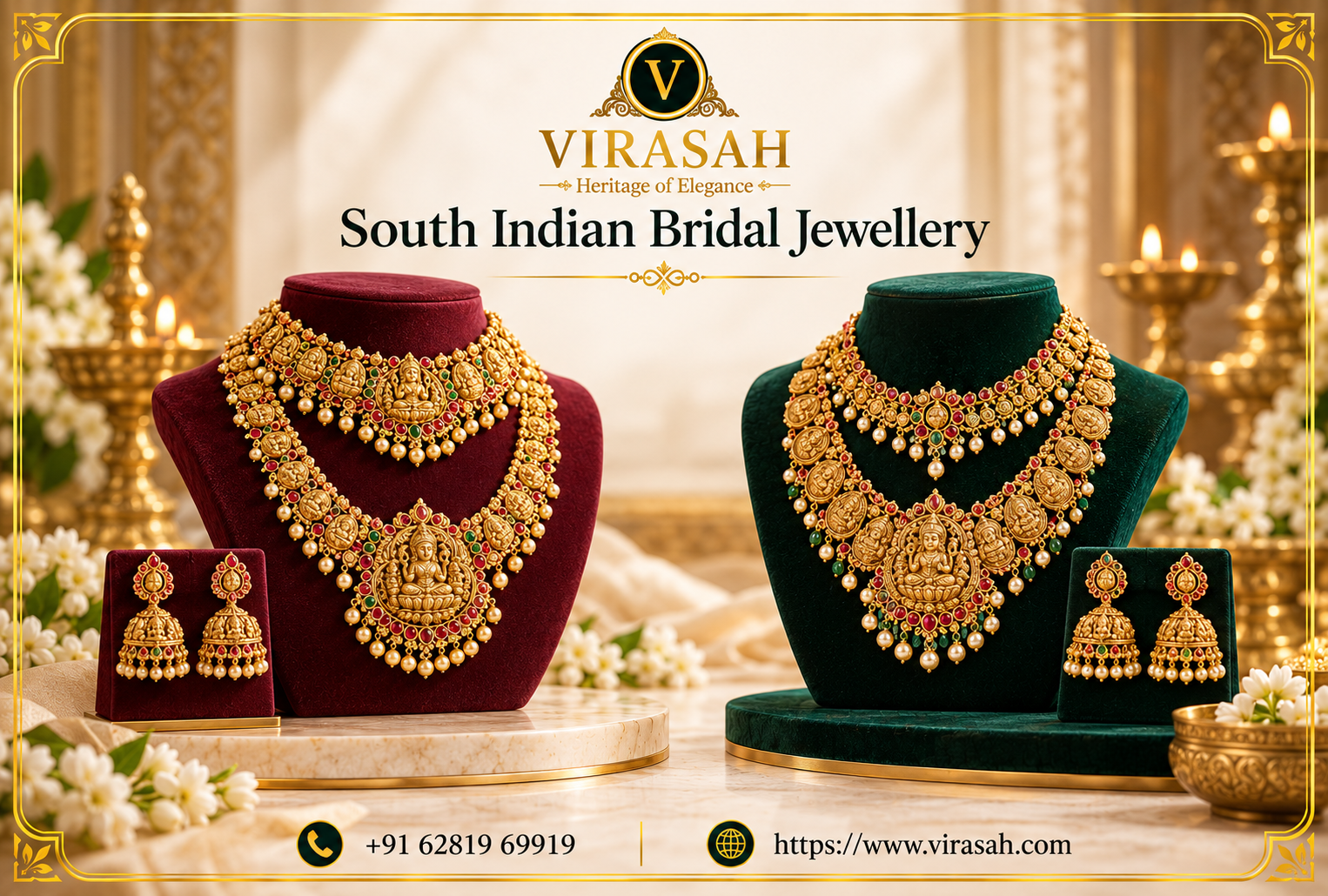
What Makes South Indian Bridal Jewellery Special?
Traditional South Indian Bridal Jewellery is known for designs influenced by temple architecture, nature, mythology and royal jewellery traditions. Motifs such as Lakshmi, peacocks, mangoes, flowers and intricate nakshi work commonly appear in necklaces, earrings, bangles and waist belts.
While yellow gold remains a favourite, today's brides increasingly combine traditional designs with diamonds and coloured gemstones. Ruby and emerald accents can beautifully complement red, green, maroon, gold and ivory silk sarees, while diamonds work especially well for brides seeking a lighter contemporary finish.
Essential South Indian Bridal Jewellery Pieces
1. Bridal Choker
A choker creates a strong foundation for layered bridal jewellery. It sits closely around the neck and works particularly well with traditional silk sarees. Brides can choose temple chokers, diamond chokers, kundan-inspired pieces or gemstone designs depending on their wedding theme.
2. Long Haram Necklace
A long haram adds vertical balance to the bridal look and prevents a heavily embellished saree from making the upper body appear crowded. A traditional kasu mala, Lakshmi haram, antique gold necklace or gemstone-studded long necklace can be layered beneath a choker.
3. Bridal Earrings and Jhumkas
Jhumkas are one of the most recognisable elements of South Indian Bridal Jewellery. Larger earrings work beautifully with bridal buns and braided hairstyles, while medium-sized earrings may suit brides wearing elaborate necklaces or heavy hair accessories.
4. Maang Tikka or Nethi Chutti
The forehead ornament frames the face and completes a traditional bridal hairstyle. Choose its size according to your forehead and hairstyle rather than simply selecting the largest design available.
5. Vaddanam or Waist Belt
A traditional vaddanam helps define the saree silhouette and adds grandeur to the bridal outfit. Temple-style, antique-finish and gemstone-studded waist belts are popular options for South Indian weddings.
6. Bangles
Gold bangles can be combined with diamond, gemstone or antique designs. Instead of using identical bangles throughout the stack, brides can mix textures and widths while keeping one dominant design theme.
South Indian Bridal Jewellery Styling Guide
| Bridal Style | Recommended Jewellery | Best Styling Approach |
|---|---|---|
| Traditional Temple Look | Temple choker, Lakshmi haram, jhumkas, vaddanam | Pair with rich Kanjeevaram sarees and traditional hair styling |
| Diamond Bridal Look | Diamond choker, necklace and matching earrings | Keep layering refined for a clean luxurious appearance |
| Ruby & Emerald Look | Gold jewellery accented with rubies and emeralds | Coordinate gemstone colours with the saree border |
| Antique Bridal Look | Antique-finish necklace, jhumkas and waist belt | Ideal for heritage and temple-inspired wedding themes |
| Modern South Indian Bride | Statement choker, elegant earrings and minimal long necklace | Mix traditional craftsmanship with contemporary proportions |
How to Match Jewellery with Your Bridal Saree
The saree should influence your jewellery selection. With heavily woven gold Kanjeevaram sarees, elaborate South Indian Bridal Jewellery creates a naturally harmonious appearance. However, when the saree contains multiple bold colours and a detailed border, using jewellery with too many competing colours can make the overall look appear busy.
Choosing Gemstones for Bridal Jewellery
Gemstones give bridal jewellery personality and colour. Ruby and emerald combinations are especially popular because the red-and-green palette complements many traditional bridal sarees. Brides interested in coloured gemstones should consider colour, clarity, treatment disclosure, durability and certification rather than judging a stone only by size.
Explore Virasah's detailed Ruby Jewelry Guide and learn why certain rubies are particularly valued in the guide to Burmese Ruby.
Brides considering blue gemstones can read the Sapphire Jewelry Guide and discover the history and rarity of Kashmir Sapphire.
For green gemstone jewellery, see the guide to Emerald Jewelry Designs for Weddings. Brides interested in unusual coloured stones can also explore Tanzanite Jewelry and Virasah's guide to Rare Gemstones in India.
How to Buy South Indian Bridal Jewellery Wisely
Check Gold Purity and Hallmarking
When purchasing gold South Indian Bridal Jewellery in India, understand the purity of the gold and check applicable hallmark information. Ask the jeweller to clearly explain gold weight, gemstone weight, making charges and other components of the final price.
Ask About Gemstone Treatments
Natural gemstones may undergo different treatments. If your bridal necklace contains important rubies, sapphires or emeralds, request clear information about whether stones are natural, treated or laboratory-grown and whether an independent laboratory report is available.
Consider Comfort Alongside Appearance
Bridal jewellery may be worn continuously for several hours. Test necklaces for weight distribution, earrings for comfort and bangles for correct sizing. A beautiful design loses its appeal if it becomes uncomfortable halfway through the ceremony.
Think Beyond the Wedding Day
Some statement bridal pieces will naturally be reserved for major occasions, but versatile chokers, bangles, earrings and gemstone necklaces can often be restyled later. Building a bridal collection with future use in mind may provide better long-term value.
Explore More Wedding Jewellery Guides from Virasah
If you are planning your complete jewellery collection, read Virasah's Best Wedding Jewelry for Indian Brides: Complete Checklist. Brides considering diamond pieces can also explore the Best Diamond Cuts Buying Guide.
You can also visit Virasah to explore jewellery collections and discover designs suitable for weddings, celebrations and special occasions.
Authoritative Jewellery and Gemstone Resources
- Bureau of Indian Standards – Hallmarking Overview
- BIS – Gold and Silver Hallmarking FAQs
- Gemological Institute of America – Ruby Buyer's Guide
- Gemological Institute of America – Sapphire Buyer's Guide
- Gemological Institute of America – Emerald Care Guide
- World Gold Council – Gold Information and Research
Frequently Asked Questions About South Indian Bridal Jewellery
1. What jewellery does a South Indian bride usually wear?
A traditional bridal set may include a choker, long haram, earrings, forehead jewellery, bangles, rings, waist belt and hair accessories. The exact combination varies according to family traditions, region and personal preference.
2. Which gold is commonly preferred for South Indian Bridal Jewellery?
High-purity gold jewellery is traditionally popular, but the appropriate purity can vary according to the design, gemstone setting and durability requirements. Buyers should always check the stated purity and applicable hallmark details.
3. Can diamonds be mixed with traditional South Indian jewellery?
Yes. Diamond chokers, earrings and necklaces can be paired with traditional sarees. The key is maintaining consistency in design and avoiding too many unrelated jewellery styles in one look.
4. Are ruby and emerald combinations suitable for South Indian brides?
Yes. Ruby and emerald combinations are particularly attractive with red, green, maroon, gold and contrasting silk sarees and can add colour without losing the traditional bridal character.
5. How many necklaces should a bride wear?
There is no fixed rule. Many brides combine a shorter choker with one long haram. For a lighter modern style, one statement necklace may be sufficient.
6. When should South Indian Bridal Jewellery be purchased?
Start finalising major jewellery several months before the wedding, particularly if pieces require customisation. This leaves enough time for fittings, saree coordination and any required adjustments.
7. How can bridal jewellery look luxurious without appearing too heavy?
Focus on proportion. Select one or two statement pieces and allow the remaining jewellery to support them. Matching the scale of jewellery to your face, neckline, hairstyle and saree creates a more refined appearance.
Final Thoughts
Choosing South Indian Bridal Jewellery is about much more than following a checklist. Every necklace, gemstone, bangle and accessory should work together with the bride's saree, hairstyle and personality. Traditional pieces can create a magnificent heritage look, while diamonds and coloured gemstones can introduce a sophisticated contemporary dimension.
Before making a major purchase, compare designs carefully, understand gold purity and gemstone quality, ask about treatments and certifications, and consider whether the jewellery will remain wearable beyond the wedding. Thoughtfully selected South Indian Bridal Jewellery can become more than a bridal accessory—it can become a meaningful part of a family's jewellery collection for generations.
Contact Virasah:
Looking for elegant jewellery for your wedding or special occasion? Explore Virasah's collection and discover designs created to complement memorable celebrations.
Website: www.virasah.com
Phone: +91 62819 69919