Complete Bridal Jewellery Checklist for an Indian Wedding
An Indian bridal look is rarely complete without jewellery. From the necklace framing the bridal blouse to the maang tikka, earrings, bangles and anklets, every piece contributes to the bride's overall appearance. With so many traditions, gemstones, metals and designs to consider, having a detailed Bridal Jewellery Checklist can make wedding shopping far more organised.
The ideal bridal collection should not simply include as many ornaments as possible. Each piece should complement the bridal outfit, wedding traditions, face shape, hairstyle and personal style. This complete Bridal Jewellery Checklist will help you understand which jewellery pieces to consider and how to select them carefully for an Indian wedding.
Explore more fine jewellery and wedding collections at Virasah Jewellery.
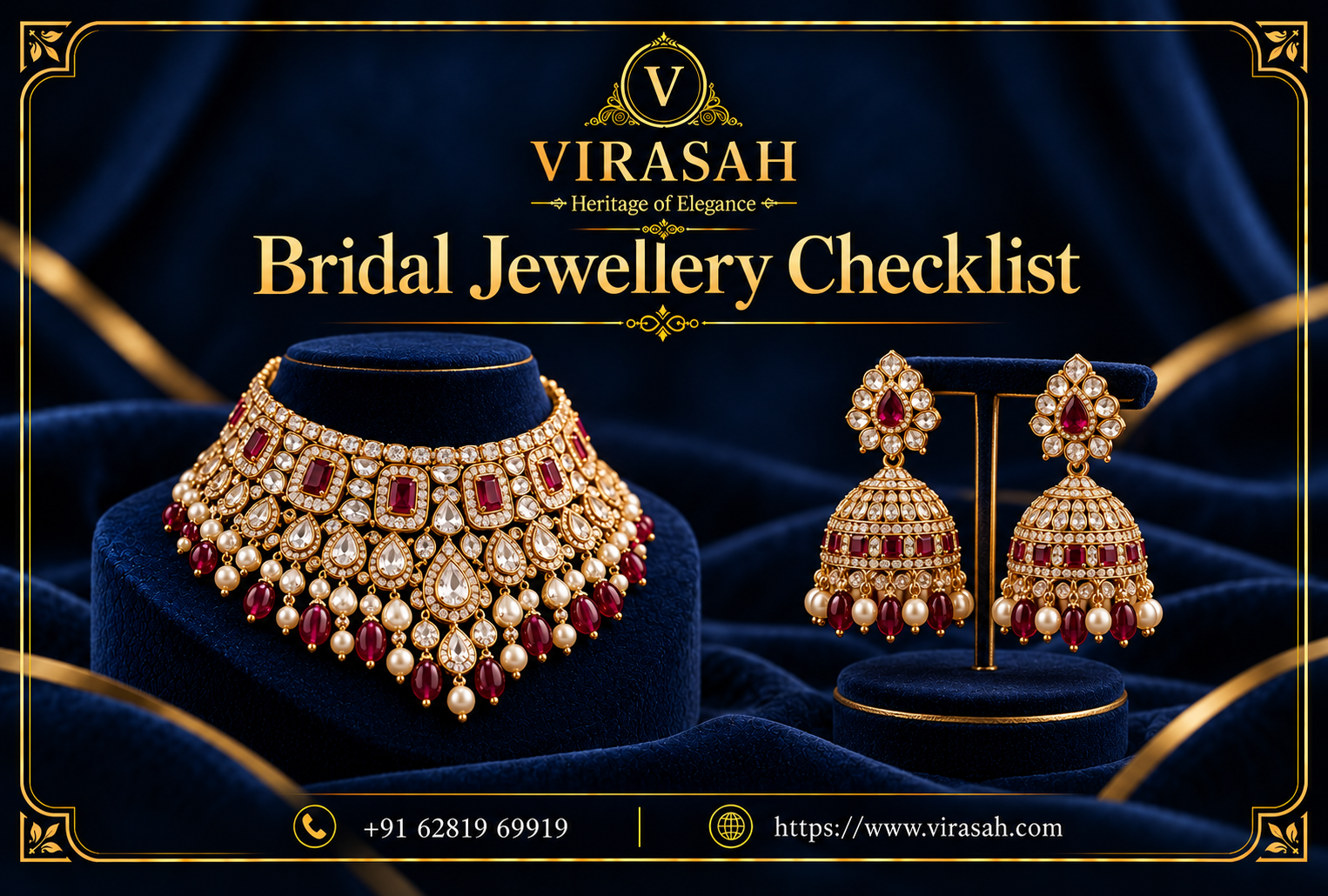
Why You Need a Bridal Jewellery Checklist
Wedding jewellery is usually purchased across several shopping sessions. Without a plan, brides may accidentally buy pieces that compete with one another, do not suit the outfit neckline or remain unused after the wedding.
A practical Bridal Jewellery Checklist helps you prioritise essential ornaments before considering optional statement pieces. It also makes budgeting easier because you can decide where to invest more and where a lighter design will work perfectly.
Quick Bridal Jewellery Checklist
- Bridal necklace or choker
- Long necklace or haar
- Bridal earrings
- Maang tikka or matha patti
- Nath or bridal nose ring
- Bangles and kadas
- Mangalsutra
- Bridal rings
- Haath phool
- Kamarbandh or waist belt
- Payal or anklets
- Toe rings where culturally appropriate
1. Bridal Necklace or Choker
The necklace is usually one of the most noticeable elements of Indian bridal jewellery. Brides can choose between diamond chokers, kundan necklaces, polki jewellery, emerald necklaces, ruby designs or traditional gold jewellery.
Consider your blouse neckline before finalising the necklace. A deep neckline can accommodate a broader choker or layered necklace, while a heavily embroidered high neckline may look more balanced with a cleaner design.
Brides interested in coloured gemstones can explore emerald jewellery designs for weddings and special occasions. Emeralds can introduce an elegant contrast against red, maroon, ivory and gold bridal outfits.
2. Long Bridal Haar
A long haar can be layered below a choker to create the luxurious, multidimensional jewellery styling commonly seen in Indian weddings. Depending on the wedding style, you may choose a long diamond necklace, pearl haar, gemstone necklace or traditional gold piece.
When layering necklaces, avoid selecting two pieces that are equally elaborate. If the choker has a very bold pendant or gemstone arrangement, consider a more structured long necklace to create visual balance.
3. Bridal Earrings
Jhumkas, chandbalis, diamond drops and gemstone earrings are all popular bridal choices. Earrings should complement the necklace instead of competing with it.
If you are wearing a heavy choker and matha patti, slightly smaller earrings can help create a balanced look. Brides choosing minimal neck jewellery can make earrings the main statement.
Diamonds remain a versatile option for weddings because they can also be worn after the ceremony. Before purchasing significant diamond pieces, understanding the four major diamond quality factors—cut, colour, clarity and carat weight—can help you compare options more confidently. Read the GIA Diamond Buyer's Guide for additional guidance.
4. Maang Tikka and Matha Patti
A maang tikka draws attention to the centre of the forehead and beautifully frames the bridal hairstyle. Brides wanting a more regal appearance can choose a matha patti that extends along the hairline.
The size should be chosen according to your forehead, hairstyle and other jewellery. A large maang tikka works beautifully with an open forehead, while a delicate design may better complement an already elaborate hairstyle.
5. Bridal Nath
The nath is an important traditional ornament in many Indian communities. Designs range from tiny diamond nose pins to large bridal hoops connected to the hair with a chain.
If you do not normally wear a nose ring, test the bridal nath before the wedding. Make sure it feels comfortable and does not interfere with eating, speaking or posing for photographs.
6. Bangles and Kadas
No Bridal Jewellery Checklist would be complete without bangles. Depending on regional tradition, a bridal bangle stack may include gold bangles, diamond bangles, glass bangles, chooda, gemstone bangles or statement kadas.
When purchasing gold jewellery in India, check applicable hallmarking information. The Bureau of Indian Standards hallmarking information explains how hallmarking provides an official indication of precious-metal purity.
7. Mangalsutra
For many Indian weddings, the mangalsutra carries strong cultural and emotional importance. Modern brides can select traditional black-beaded gold designs or contemporary diamond mangalsutras that are easier to incorporate into everyday outfits.
Choose a length and pendant size that suits how frequently you expect to wear it after the wedding.
8. Bridal Rings
Your engagement ring may remain the main ring for the wedding, but many brides also add gemstone or diamond cocktail rings.
If diamonds form an important part of your bridal collection, visit Virasah's guide to the best diamond cuts for engagement rings before selecting a statement piece.
9. Haath Phool
Haath phool connects finger rings with a bracelet and adds detail to mehendi-covered hands. It is especially attractive during close-up wedding photography and traditional ceremonies.
Choose a flexible design that allows comfortable hand movement. Extremely heavy pieces can become uncomfortable during long wedding rituals.
10. Kamarbandh
A kamarbandh or waist belt can beautifully define the waist when worn with a saree, lehenga or traditional bridal outfit. Gold, diamond, pearl and gemstone kamarbandhs can all work depending on the outfit.
Avoid a very heavy waist belt when the lehenga itself has dense embroidery around the waistline.
11. Payal and Toe Rings
Payal adds a graceful finishing detail to traditional bridal styling. Silver anklets remain common, although contemporary designs may incorporate gemstones or minimal detailing.
Toe rings are also part of wedding traditions in several Indian communities. Your final Bridal Jewellery Checklist should therefore reflect your family's customs rather than following a generic list alone.
Choosing Gemstones for Bridal Jewellery
Gemstones can transform a bridal jewellery set and introduce colour without overwhelming the outfit. Ruby, emerald and sapphire are especially popular choices.
For deeper research before selecting coloured stones, explore Virasah's guides on ruby jewellery, sapphire jewellery and rare gemstones in India.
For independent gemstone education, the Gemological Institute of America also provides dedicated buying information for rubies, sapphires and emeralds. These resources explain factors such as colour, clarity, cut, treatments and laboratory reports.
Special Gemstones for a Statement Bridal Look
Brides searching for something beyond conventional diamond or gold jewellery can consider rare gemstones. Tanzanite, Burmese ruby and Kashmir sapphire are examples that appeal to collectors and gemstone enthusiasts.
Learn more through Virasah's detailed articles on tanzanite jewellery, Burmese ruby and Kashmir sapphire.
Important Bridal Jewellery Buying Tip
For expensive gemstones and diamonds, ask for appropriate documentation and clearly understand whether the stones are natural, laboratory-grown or treated. The FTC Jewelry Guides provide useful consumer information about how jewellery materials and gemstones should be represented.
How to Build Your Bridal Jewellery Collection
- Finalise your wedding outfit first: Jewellery should complement the colour, embroidery and neckline.
- Set your jewellery budget: Allocate more toward pieces you expect to wear repeatedly after the wedding.
- Choose one dominant jewellery style: Diamond, gold, kundan, polki or coloured gemstones can become the foundation of the look.
- Balance heavy and light pieces: Avoid making every ornament oversized.
- Try everything together: Conduct a complete bridal trial with jewellery, makeup, hairstyle and outfit.
You can also compare your choices with Virasah's wedding jewellery checklist for Indian brides for additional styling inspiration.
Frequently Asked Questions
1. What jewellery does an Indian bride need?
A typical Bridal Jewellery Checklist may include a necklace, earrings, maang tikka, bangles, rings, mangalsutra, nath, haath phool, kamarbandh and anklets. The exact selection varies according to regional customs and personal preference.
2. Should bridal jewellery match the lehenga exactly?
No. Jewellery can either coordinate with the outfit or create contrast. For example, emerald jewellery can add a striking green accent to red, ivory or gold bridal clothing.
3. Is gold or diamond jewellery better for an Indian wedding?
Both can work beautifully. Traditional ceremonies often favour gold jewellery, while diamonds create a contemporary and versatile bridal look. Many brides combine diamonds with emeralds, rubies or other gemstones.
4. How should I choose a bridal necklace?
Consider your neckline, face shape, embroidery and other jewellery. A heavily embellished blouse may require a cleaner necklace, while a simpler outfit can support a dramatic choker or layered haar.
5. When should I start buying bridal jewellery?
Start planning once the main bridal outfits are selected. This gives enough time to compare designs, arrange customisation where required and perform a full jewellery trial before the wedding.
6. How can I avoid over-accessorising my bridal look?
Select one or two statement areas. For example, pair a dramatic necklace with controlled earrings, or choose statement earrings with a slightly simpler necklace. Balance is more important than the number of pieces.
Final Bridal Jewellery Checklist
The perfect Indian bridal jewellery collection is one that combines tradition, craftsmanship, comfort and your individual personality. Instead of purchasing jewellery randomly, use this Bridal Jewellery Checklist to build the look systematically—from necklaces and earrings to bangles, gemstone pieces and finishing accessories.
Consider how each piece interacts with your wedding outfit and how useful it will be after the wedding. Jewellery that works beautifully during the ceremony and remains wearable for future celebrations can become part of your collection for years to come.
Whether you prefer diamonds, precious gemstones or traditional Indian designs, careful planning will help you create a bridal look that feels coordinated rather than crowded.
Discover Bridal Jewellery at Virasah:
Explore jewellery created for weddings, celebrations and timeless occasions
Website: www.virasah.com.
Phone: +91 62819 69919