Natural Diamond Engagement Rings: How to Choose the Perfect One
Choosing Natural Diamond Engagement Rings is about far more than comparing carat weights or selecting the biggest stone within a budget. An engagement ring becomes part of a personal story. It may be worn almost every day, appear in countless photographs and eventually become a treasured family heirloom. The ideal ring therefore needs to balance natural beauty, diamond quality, craftsmanship, comfort, personality and budget.
For many couples, Natural Diamond Engagement Rings have an emotional quality that goes beyond jewellery. A natural diamond was created through geological processes deep within the earth over an extraordinary span of time. When that diamond is selected for an engagement ring, its rarity and permanence can feel especially appropriate for a lifelong commitment.
At the same time, buying Natural Diamond Engagement Rings can initially seem complicated. There are diamond shapes, the 4Cs, grading reports, settings, precious metals, fluorescence, proportions, ring sizes and design details to consider. Prices can differ considerably even between diamonds that appear similar at first glance.
The good news is that purchasing Natural Diamond Engagement Rings becomes much easier once you understand which factors genuinely influence beauty and which characteristics matter most to you. Rather than searching for a theoretically perfect diamond on paper, the goal should be to find a beautiful, well-crafted ring whose combination of characteristics suits the wearer.
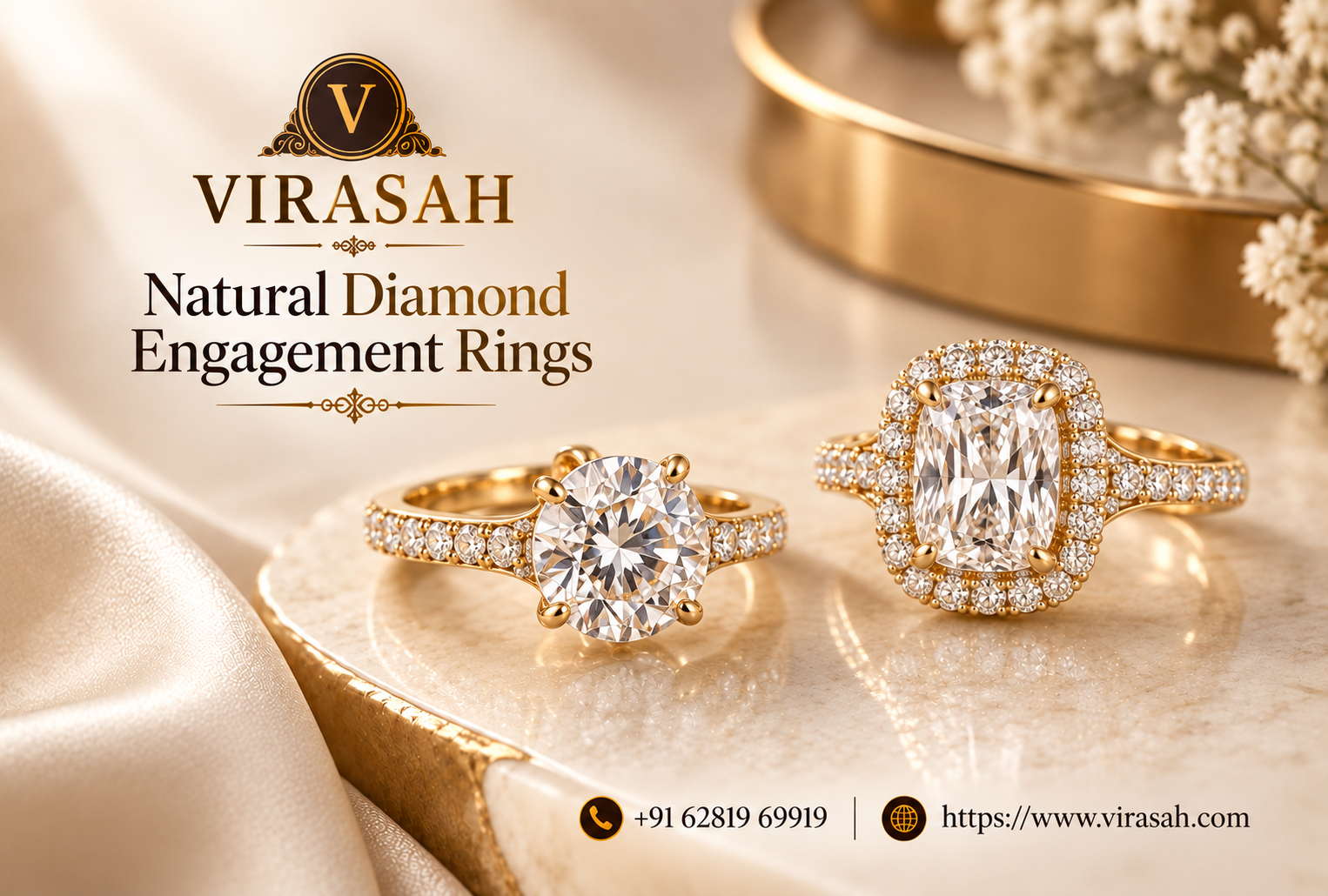
Why Natural Diamonds Remain Meaningful for Engagement Rings
The appeal of Natural Diamond Engagement Rings begins with the stone itself. Natural diamonds form within the earth under conditions of intense heat and pressure before geological processes eventually bring some of them closer to the surface.
Every natural diamond develops its own combination of characteristics. Two diamonds with similar grading information can still look subtly different because inclusions, facet patterns, proportions and light behaviour vary from stone to stone. This individuality is one of the reasons people are drawn to Natural Diamond Engagement Rings.
An engagement ring is also one of the few jewellery purchases that many people expect to wear for decades. As a result, durability matters. Diamond ranks extremely high for hardness, making it well suited to jewellery intended for frequent wear. This does not mean a diamond cannot be chipped or damaged, but it does make it an exceptionally practical gemstone when mounted appropriately.
For buyers who value rarity, geological origin and traditional symbolism, Natural Diamond Engagement Rings offer a distinctive combination. Yet natural origin alone should never replace careful evaluation. A successful purchase requires attention to the individual diamond, its grading documentation, the design of the setting and the quality of workmanship.
Start With the Person, Not the Diamond Certificate
One of the most useful principles when selecting Natural Diamond Engagement Rings is to begin with the person who will wear the ring. Diamond grades are important, but an engagement ring is ultimately an object of personal expression.
Observe the jewellery the person already wears. Is it understated or dramatic? Does the wearer prefer warm yellow gold, cool platinum, white gold or romantic rose tones? Are their existing pieces modern and minimal, vintage inspired, geometric or traditional?
Consider lifestyle as well. Someone who works frequently with their hands may appreciate Natural Diamond Engagement Rings with a lower-profile setting. Someone who enjoys statement jewellery might prefer a larger centre stone, halo design or elaborate side stones.
Personal style can save you from spending money on specifications that the wearer will barely notice while overlooking features they would appreciate every day.
Understand the 4Cs Before Comparing Diamonds
Anyone shopping for Natural Diamond Engagement Rings should understand the 4Cs: cut, colour, clarity and carat weight. The Gemological Institute of America developed the 4Cs as a standardized framework for describing diamond quality. You can explore the official GIA guide to the 4Cs of diamond quality.
The four characteristics work together rather than independently. A slightly smaller diamond with exceptional cut can sometimes appear more beautiful than a larger diamond with weaker light performance. Likewise, choosing a lower clarity grade can provide excellent value when inclusions are not visible without magnification.
1. Cut: The Characteristic That Brings a Diamond to Life
For many Natural Diamond Engagement Rings, cut quality deserves particularly close attention. Cut does not simply mean whether a diamond is round, oval or pear shaped. In grading terminology, cut describes how effectively a diamond's proportions and facet arrangement interact with light.
A beautifully cut diamond can display brightness, flashes of spectral colour commonly called fire, and lively scintillation as the stone or observer moves. GIA explains the technical principles in its authoritative diamond quality factors guide.
If you are buying round brilliant Natural Diamond Engagement Rings, cut grading provides an especially useful comparison tool. Prioritising an excellent or very strong cut can often deliver more visible impact than paying for a clarity grade that cannot be distinguished by the unaided eye.
Fancy shapes require more visual evaluation because overall outline, symmetry and facet pattern have a major effect on appearance. With ovals, pears and marquises, for example, the intensity of the central bow-tie pattern should be assessed visually rather than selected purely from numbers.
2. Colour: How Colourless Should Your Diamond Be?
When discussing white Natural Diamond Engagement Rings, colour refers primarily to the amount of body colour visible in the diamond. GIA uses a D-to-Z colour grading scale for diamonds within this range, with D representing the colourless end of the scale.
The highest colour grade is not automatically the best purchase for every ring. Many near-colourless diamonds can face up beautifully once mounted, particularly when their colour complements the chosen metal.
Yellow or rose gold can allow buyers of Natural Diamond Engagement Rings to consider somewhat warmer diamonds because the surrounding metal already introduces warmth. Platinum and white gold may make colour differences easier to notice, especially from the side.
Diamond shape also matters. Round brilliant cuts can disguise moderate body colour effectively, while elongated step cuts such as emerald cuts may reveal colour differently.
3. Clarity: Look for Beauty, Not Merely a Grade
Clarity measures internal features known as inclusions and surface characteristics known as blemishes. Because diamonds form naturally, these characteristics can serve as identifying features of individual stones.
A common mistake with Natural Diamond Engagement Rings is paying a significant premium for extremely high clarity when a lower clarity diamond would appear equally clean without magnification.
An “eye-clean” diamond—one whose inclusions are not distracting to normal unaided viewing—can provide an excellent balance of beauty and value. Inclusion location matters too. A small inclusion near the edge may be less visually noticeable and can sometimes be positioned strategically relative to a prong, while a dark inclusion directly beneath the table may be more apparent.
For step-cut Natural Diamond Engagement Rings such as emerald or Asscher cuts, buyers sometimes choose stronger clarity because broad, open facets can make inclusions easier to see.
4. Carat Weight: Weight Is Not the Same as Visible Size
Carat is a measurement of diamond weight rather than physical diameter. Two one-carat diamonds can have different visible face-up sizes depending on shape and proportions.
When comparing Natural Diamond Engagement Rings, consider measurements alongside carat weight. A well-proportioned stone should have an attractive relationship between its weight and visible spread.
Prices can also rise noticeably around popular milestone weights such as 0.50, 0.75, 1.00, 1.50 and 2.00 carats. Choosing a diamond slightly below a milestone may offer an opportunity for value while producing a visual difference that is difficult to detect once the ring is worn.
| Factor | What It Describes | Practical Buying Priority |
|---|---|---|
| Cut | How effectively the diamond interacts with light | Prioritise beauty and light performance |
| Colour | Relative absence of body colour in a white diamond | Choose a grade that looks attractive in the selected metal |
| Clarity | Internal inclusions and external blemishes | Look for a visually clean stone rather than automatically buying the highest grade |
| Carat | Diamond weight | Balance weight with proportions, dimensions and budget |
Choose the Diamond Shape That Matches the Wearer
After understanding quality factors, the next major decision for Natural Diamond Engagement Rings is shape. Shape changes the personality of the ring and can influence how large the diamond appears, how much it sparkles and how it complements the wearer's hand.
Round Brilliant
Round brilliant diamonds are among the most recognised choices for Natural Diamond Engagement Rings. Their facet structure is designed for strong brilliance and scintillation, and the shape adapts easily to solitaire, halo, pavé, three-stone and vintage-inspired settings.
Oval
Oval diamonds combine brilliant-style sparkle with an elongated outline. They can appear large relative to their carat weight because of their face-up dimensions and often create an elegant lengthening effect on the finger.
When evaluating oval Natural Diamond Engagement Rings, compare several stones visually because length-to-width ratio and bow-tie appearance can differ substantially.
Emerald Cut
Emerald-cut diamonds have long step facets and a sophisticated hall-of-mirrors appearance. Instead of producing the intense scintillation associated with brilliant cuts, they emphasise flashes of light, symmetry and clarity.
Buyers considering emerald-cut Natural Diamond Engagement Rings should look carefully at clarity, colour, symmetry and the overall elegance of the outline.
Cushion Cut
Cushion diamonds combine a square or rectangular outline with softened corners. Depending on the facet pattern, they can produce different visual personalities ranging from classic broad flashes to highly scintillating modern appearances.
Pear Shape
Pear diamonds combine rounded and pointed elements in a distinctive teardrop silhouette. They can work beautifully in both classic and unconventional Natural Diamond Engagement Rings. Symmetry around the central axis is especially important when evaluating a pear.
Princess Cut
Princess-cut diamonds are popular among people who enjoy a clean, geometric shape without sacrificing brilliant-style sparkle. Protective setting design is important because their pointed corners require thoughtful support.
Marquise
The marquise shape has a long silhouette and pointed tips, giving it excellent visual spread. Well-proportioned marquise Natural Diamond Engagement Rings can look dramatic and elegant, but the pointed ends should be protected with appropriate prongs.
Radiant Cut
Radiant diamonds combine an angular outline with brilliant-style faceting. They are a versatile option for buyers who like the architectural feel of rectangular diamonds but also want energetic sparkle.
Asscher Cut
Asscher diamonds feature a square step-cut pattern with clipped corners and strong geometric symmetry. These Natural Diamond Engagement Rings suit buyers who appreciate Art Deco influences and refined design.
For a detailed exploration of diamond shapes, read Virasah's complete guide to the best diamond cuts for engagement rings.
Understand How Ring Settings Change the Entire Design
The setting affects the appearance, security, profile and daily practicality of Natural Diamond Engagement Rings. It should therefore be chosen with as much care as the centre stone.
Solitaire Setting
A solitaire places emphasis on a single centre diamond. Because the design is visually clean, the shape and individual beauty of the stone become the main focus.
Classic solitaire Natural Diamond Engagement Rings can be surprisingly versatile. A slim band creates a delicate appearance, while a substantial band can feel more architectural and contemporary.
Halo Setting
A halo surrounds the centre diamond with smaller diamonds. This can create additional sparkle and increase the overall visual footprint of the ring.
Halo Natural Diamond Engagement Rings range from traditional styles to very refined modern versions with tiny pavé diamonds and minimal metal visibility.
Three-Stone Setting
A three-stone design places a centre diamond between two side stones. The format offers numerous opportunities for symbolism and customisation.
Side stones in three-stone Natural Diamond Engagement Rings may match the centre shape or use complementary cuts such as tapered baguettes, pears or trapezoids.
Pavé Setting
Pavé designs incorporate small diamonds along the band to create continuous sparkle. The workmanship is extremely important because the tiny stones must be securely set while retaining a refined appearance.
Bezel Setting
A bezel surrounds all or part of the diamond with metal. Bezel-set Natural Diamond Engagement Rings can offer a sleek contemporary appearance and increased protection around the edge of the stone.
Cathedral Setting
A cathedral setting uses rising shoulders that visually support the centre diamond. It can create a graceful traditional profile and provide additional opportunities for design details.
Select the Right Precious Metal
The metal of Natural Diamond Engagement Rings influences colour, maintenance, durability and overall style. Gold and platinum remain popular choices, but the correct option depends on the wearer.
Yellow Gold
Yellow gold creates a warm, traditional appearance and pairs beautifully with both colourless and slightly warmer diamonds. It works particularly well for heritage-inspired Natural Diamond Engagement Rings and designs influenced by Indian jewellery traditions.
White Gold
White gold offers a bright, contemporary background that complements the appearance of white diamonds. Depending on the alloy and finish, periodic maintenance may be required to preserve its bright white surface.
Rose Gold
Rose gold introduces a soft warm tone created through its alloy composition. It can make Natural Diamond Engagement Rings feel romantic, distinctive and contemporary while still retaining a timeless quality.
Platinum
Platinum is naturally white and is appreciated for durability and density. It is frequently chosen for important Natural Diamond Engagement Rings, particularly when buyers want a substantial precious metal with a naturally white appearance.
Certification and Grading Reports: What Buyers Should Know
A reputable grading report can be extremely useful when comparing Natural Diamond Engagement Rings. It documents measurable and professionally assessed characteristics of the loose diamond before setting.
Depending on the laboratory and report type, information may include carat weight, colour grade, clarity grade, dimensions, proportions, polish, symmetry and fluorescence.
However, a report should support your buying decision rather than replace visual inspection. Two Natural Diamond Engagement Rings containing diamonds with apparently similar report specifications can still differ in character and visual appeal.
GIA provides extensive consumer education about grading and the 4Cs through its official diamond education platform. Buyers should also compare report identification details carefully with the diamond being offered.
Natural Diamond Versus Laboratory-Grown Diamond: Know What You Are Buying
Buyers considering Natural Diamond Engagement Rings should clearly distinguish natural diamonds from laboratory-grown diamonds and diamond simulants.
The distinction concerns origin rather than simply appearance. A natural diamond originates through geological processes in the earth, while a laboratory-grown diamond is produced through technological processes under controlled manufacturing conditions.
Consumers should expect accurate disclosure. The U.S. Federal Trade Commission's consumer guidance for buying diamonds and gemstones explains terminology buyers may encounter and encourages consumers to understand what they are purchasing. The FTC's broader Jewelry Guides also address representations involving jewellery and diamonds.
If your preference is specifically for Natural Diamond Engagement Rings, ask the jeweller directly about natural origin and check the corresponding documentation rather than making assumptions based on appearance.
Fluorescence: Should It Matter?
Fluorescence is another characteristic that shoppers may encounter when comparing Natural Diamond Engagement Rings. Some diamonds emit visible light under ultraviolet radiation.
Fluorescence is not automatically positive or negative. Its visual impact depends on its strength, colour and interaction with the individual stone. GIA's research and diamond quality resources explain that fluorescence occurs in a portion of gem diamonds and usually needs to be considered in context rather than judged in isolation.
When assessing Natural Diamond Engagement Rings, examine the diamond in several lighting environments if possible. If a stone has stronger fluorescence, check that you like its overall appearance rather than rejecting it solely because a report mentions fluorescence.
How to Set a Realistic Engagement Ring Budget
There is no universal formula for how much someone should spend on Natural Diamond Engagement Rings. Traditional salary rules are marketing conventions, not financial requirements.
A sensible budget is one that allows you to purchase a meaningful, well-made ring without creating uncomfortable financial pressure.
Start by establishing the full ring budget rather than only the diamond budget. The setting, precious metal, side diamonds and custom work can all contribute meaningfully to the final cost of Natural Diamond Engagement Rings.
Then decide what matters most visually. If size is important, consider a near-colourless, eye-clean diamond rather than allocating excessive budget to very high colour and clarity grades. If extraordinary sparkle matters most, direct more of the budget toward cut quality.
A Smart Order for Allocating Your Budget
- Choose the diamond shape you genuinely love.
- Prioritise excellent visual performance and attractive proportions.
- Select a colour range that looks beautiful in the intended metal.
- Choose a clarity grade that appears clean to the eye.
- Decide how much additional carat weight the remaining budget allows.
- Reserve enough for a secure, beautifully made setting.
This approach often leads to more satisfying Natural Diamond Engagement Rings than simply purchasing the highest grades available in every category.
Why Craftsmanship Matters as Much as the Diamond
A beautiful diamond can be diminished by poor jewellery construction. High-quality Natural Diamond Engagement Rings require precise craftsmanship because the setting must protect the stone, sit comfortably on the hand and maintain its integrity through years of wear.
Inspect the prongs around the centre stone. They should appear balanced and properly finished. Pavé diamonds should form an even line. Surfaces should be polished appropriately, edges should feel comfortable and the ring should look intentional from every angle.
At Virasah, craftsmanship is connected with a broader philosophy of jewellery created for lasting meaning. The brand describes its work as handcrafted in gold, silver and platinum, with natural diamonds and rare gemstones selected for individual beauty and character. You can explore Virasah's natural diamond and gemstone jewellery for more information.
Should You Choose a Ready-Made or Custom Engagement Ring?
Both options can produce exceptional Natural Diamond Engagement Rings. The right choice depends on timeline, personalisation and how specific your design preferences are.
Ready-Made Engagement Rings
A ready-made ring allows you to see the finished piece before buying. This is useful when the wearer finds a design they already love and wants a straightforward buying process.
Custom Engagement Rings
Custom Natural Diamond Engagement Rings allow details to be created around the wearer. You can select the centre diamond first and then design proportions, setting height, prong style, band width and accent stones around it.
Custom design can be particularly meaningful when incorporating family influences, cultural motifs, unusual diamond shapes or elements inspired by heirloom jewellery.
Think About Ring Proportions, Not Individual Features
The finest Natural Diamond Engagement Rings usually feel harmonious because every element has been considered together.
A very delicate band can make a centre diamond appear larger but may not suit every lifestyle. A broad band can provide visual strength but may make the diamond appear smaller by comparison. Large prongs provide security but need refined shaping so they do not overwhelm a delicate stone.
The height of Natural Diamond Engagement Rings also matters. A high-set centre stone can appear dramatic and accommodate certain wedding bands, while a lower setting may feel more practical for everyday use.
Try to view the ring from above, from the side and while worn naturally on the hand. A design that looks beautiful in a magnified product photograph should still feel balanced in real-world proportions.
Match the Engagement Ring With a Future Wedding Band
Many couples choose Natural Diamond Engagement Rings without thinking about the wedding band until much later. Considering the two rings together from the beginning can prevent awkward gaps or incompatible profiles.
If the engagement ring has a low basket, a straight wedding band may not sit completely flush. Some wearers love the small gap; others prefer a contour band designed around the centre setting.
For bridal styling inspiration beyond Natural Diamond Engagement Rings, explore Virasah's complete wedding jewellery checklist for Indian brides.
How Indian Bridal Style Can Influence the Engagement Ring
In India, engagement jewellery often sits within a broader collection of bridal jewellery. This can influence the ideal design of Natural Diamond Engagement Rings.
A bride who frequently wears elaborate traditional jewellery may want an engagement ring substantial enough to remain visually present alongside bangles and other pieces. Another bride may prefer a minimal solitaire specifically because it provides contrast to heavier ceremonial jewellery.
Metal choice can also be influenced by the rest of the collection. Yellow-gold Natural Diamond Engagement Rings can blend naturally with traditional gold bridal jewellery, while platinum or white gold can create a modern contrast.
Explore Gemstone Knowledge Before Building a Jewellery Collection
Although Natural Diamond Engagement Rings may become the centrepiece of a bridal jewellery collection, understanding other gemstones can help buyers make more confident choices for wedding and heirloom pieces.
If you are interested in coloured stones, Virasah's sapphire jewellery guide explains important considerations for choosing sapphires, while the ruby jewellery guide explores ruby quality and buying principles.
Collectors who appreciate exceptional origin stories may also enjoy reading about why Kashmir sapphire is so valuable and why Burmese ruby is considered particularly important.
For brides considering green gemstones alongside Natural Diamond Engagement Rings, Virasah's guide to emerald jewellery designs for weddings and special occasions provides additional inspiration.
You can also explore tanzanite jewellery, rarity and buying considerations or discover the broader world of rare gemstones in India.
Ask About Responsible Sourcing and Industry Standards
Buyers increasingly want to understand more about the supply chain behind Natural Diamond Engagement Rings. Responsible sourcing is a complex international subject involving miners, cutters, traders, manufacturers, laboratories, governments and retailers.
One useful industry resource is CIBJO's Blue Books, which cover industry terminology, diamonds, gemstones, laboratories, precious metals and responsible sourcing principles.
The international Kimberley Process also provides information regarding the international framework established to address conflict diamonds in the trade in rough diamonds.
When buying important Natural Diamond Engagement Rings, asking a jeweller about sourcing policies and available documentation can form part of a responsible purchasing conversation.
How to Inspect a Diamond in Different Lighting
Jewellery-store lighting is often designed to maximise sparkle. When evaluating Natural Diamond Engagement Rings, it can be useful to inspect the diamond under more than one lighting condition.
Look at the ring under diffused indoor light, near natural daylight where appropriate and away from extremely concentrated display lights. Observe how evenly the diamond returns light across its face.
Rotate Natural Diamond Engagement Rings slowly instead of keeping the stone perfectly still. A diamond's personality becomes clearer when movement reveals its pattern of brightness, fire and contrast.
Also view the diamond from normal wearing distance. Magnification is valuable for understanding clarity characteristics, but an engagement ring is primarily enjoyed with the unaided eye.
Common Mistakes to Avoid When Buying an Engagement Ring
Mistake 1: Buying Based on Carat Weight Alone
A larger number on a grading report does not guarantee more beautiful Natural Diamond Engagement Rings. Poor proportions can reduce sparkle or cause a diamond to carry unnecessary weight where it is not visible face-up.
Mistake 2: Paying for Clarity You Cannot See
Very high clarity grades are rare and can command premiums. If two diamonds look equally clean to your eye, consider whether the premium meaningfully improves the ring for you.
Mistake 3: Ignoring Cut Quality
One of the easiest ways to compromise Natural Diamond Engagement Rings is to focus on carat, colour and clarity while treating cut as secondary. Light performance has enormous influence on what you actually see.
Mistake 4: Choosing a Ring That Does Not Suit Daily Life
A dramatic high setting may be beautiful but inconvenient for someone whose work requires frequent use of gloves. Design must fit the wearer rather than an idealised photograph.
Mistake 5: Ignoring the Setting Quality
The centre diamond may account for much of the cost, but weak craftsmanship can undermine otherwise beautiful Natural Diamond Engagement Rings.
Mistake 6: Shopping Only by Certificate Numbers
A grading report communicates important characteristics, but it cannot capture every aspect of visual personality. Compare actual diamonds whenever possible.
Mistake 7: Forgetting Ring Size
Correct sizing improves comfort and security. Some elaborate Natural Diamond Engagement Rings, particularly full eternity or highly detailed designs, can be difficult to resize later.
Mistake 8: Following Trends Without Considering Longevity
Engagement rings are long-term jewellery. A fashionable element can be wonderful if it genuinely matches the wearer, but timeless personal taste should carry more weight than short-lived trends.
How to Compare Two Similar Diamonds
Imagine you are comparing two diamonds for Natural Diamond Engagement Rings. Both are approximately one carat and have similar colour and clarity grades.
Diamond A has exceptional proportions and a lively face-up appearance. Diamond B has a slightly higher clarity grade but looks somewhat less energetic in ordinary light.
If the clarity difference cannot be detected without magnification, many buyers would find Diamond A more satisfying because its beauty is visible every time the ring is worn.
This example illustrates an important rule for Natural Diamond Engagement Rings: specifications should explain beauty, not replace it.
Value Does Not Mean Choosing the Cheapest Diamond
When buying Natural Diamond Engagement Rings, value means getting the combination of qualities that matters most to you for the amount you choose to spend.
A very inexpensive diamond that lacks visual beauty or reliable documentation may not represent value. Likewise, paying substantial premiums for grades that do not noticeably improve the ring may not represent value either.
The strongest value often exists in carefully balanced Natural Diamond Engagement Rings: well-cut diamonds, sensible colour and clarity choices, attractive proportions and excellent craftsmanship.
Natural Diamond Engagement Rings as Future Heirlooms
An engagement ring can become one of the most emotionally important objects a family owns. Thinking of Natural Diamond Engagement Rings as future heirlooms changes the purchasing question.
Instead of asking only, “What looks impressive today?” consider, “Will this design still feel meaningful twenty or forty years from now?”
Timeless does not necessarily mean plain. Distinctive Natural Diamond Engagement Rings can age beautifully when their details arise from genuine personal taste rather than temporary fashion.
The perfect engagement ring is not necessarily the diamond with the highest grades. It is the ring whose beauty, craftsmanship and meaning remain satisfying long after the proposal.
How to Care for Your Engagement Ring
Even durable Natural Diamond Engagement Rings benefit from thoughtful care. Diamonds can attract oils and residue that reduce visible sparkle, while settings can experience wear over years of daily use.
Clean the ring using methods appropriate for its metal, gemstones and construction. Avoid assuming that every jewellery cleaner is suitable for every piece.
Have important Natural Diamond Engagement Rings inspected periodically by an experienced jeweller, especially if you notice movement in the centre diamond or changes in prongs.
Remove the ring before activities that create unnecessary impact, abrasion or chemical exposure. Store it separately from other jewellery so that diamonds do not scratch neighbouring pieces.
A Step-by-Step Checklist for Choosing the Perfect Ring
- Define your budget. Decide how much you are comfortable spending on the complete ring.
- Understand the wearer's style. Consider current jewellery, lifestyle and design preferences.
- Select a diamond shape. Narrow the search to one or two shapes before comparing detailed specifications.
- Prioritise cut and visual beauty. For Natural Diamond Engagement Rings, sparkle and attractive proportions generally have more visible impact than extremely high clarity.
- Choose a sensible colour range. Consider how the diamond looks against your preferred metal.
- Look for eye-clean clarity. Do not automatically purchase a higher grade if the difference is invisible.
- Compare dimensions with carat weight. Pay attention to face-up spread and overall proportions.
- Review grading documentation. Understand what has been independently evaluated.
- Inspect the actual diamond. Look beyond the report and assess its personality.
- Select a secure setting. Match the setting to both aesthetic preferences and lifestyle.
- Choose the metal. Consider appearance, wear and compatibility with other jewellery.
- Check craftsmanship. Examine prongs, pavé, polish, symmetry and finishing.
- Think about a future wedding band. Decide whether a flush fit is important.
- Confirm sizing and resizing possibilities. This is especially important for intricate designs.
- Ask about after-sales care. Understand maintenance, inspection and service options for your Natural Diamond Engagement Rings.
Questions to Ask Your Jeweller Before Buying
A knowledgeable jeweller should be comfortable explaining Natural Diamond Engagement Rings clearly rather than overwhelming you with technical language.
- Is the centre stone a natural diamond?
- Which independent grading report accompanies the diamond?
- Can I compare this diamond with other stones of similar size and budget?
- Why do you recommend this particular cut, colour and clarity combination?
- Are any inclusions visible without magnification?
- How does the stone perform in normal lighting?
- How secure is the setting for daily wear?
- What precious metal and alloy are being used?
- Can the ring be resized later?
- What ongoing maintenance do you recommend?
- Can the wedding band sit flush against the engagement ring?
- What sourcing and documentation information is available?
Clear answers make selecting Natural Diamond Engagement Rings considerably easier and help establish confidence in the purchase.
Why Personal Consultation Can Be Valuable
Online education is extremely useful, but Natural Diamond Engagement Rings are unusually tactile purchases. Seeing diamonds side by side can reveal differences that are difficult to understand from specifications alone.
For example, comparing two colour grades directly may show that you cannot detect enough difference to justify the higher-priced stone. Alternatively, viewing multiple diamond shapes may reveal that the shape you preferred online does not complement the wearer's hand as well as another option.
A thoughtful consultation for Natural Diamond Engagement Rings should therefore involve education as much as sales. The objective should be to understand your priorities, show relevant alternatives and explain trade-offs clearly.
Choosing Natural Diamond Engagement Rings in Hyderabad
Hyderabad has a distinctive jewellery culture influenced by royal heritage, precious gemstones and generations of skilled craftsmanship. Buyers seeking Natural Diamond Engagement Rings in Hyderabad can therefore consider both international diamond-quality principles and the city's long tradition of finely made jewellery.
Virasah describes itself as a heritage jewellery house rooted in Hyderabad's cultural legacy, creating pieces in natural diamonds and rare gemstones with an emphasis on craftsmanship, authenticity and long-term meaning.
For buyers interested in this approach, the Virasah guide to natural diamond jewellery in Hyderabad provides additional context for choosing diamond jewellery intended to last beyond changing trends.
Expert Buying Strategy: Balance the 4Cs Instead of Maximising Them
One of the smartest ways to choose Natural Diamond Engagement Rings is to stop thinking of the 4Cs as four scores that must all be maximised.
Each quality improvement generally has a cost. The challenge is identifying where additional spending produces a visible benefit.
Suppose you compare a colourless diamond with a near-colourless diamond and cannot see a meaningful difference once both are set. The near-colourless option may free budget for better cut, larger dimensions or a more refined setting.
The same principle applies to clarity. If two diamonds used in Natural Diamond Engagement Rings look equally clean from normal viewing distance, paying substantially more for microscopic perfection may provide less practical benefit than investing elsewhere.
Carat weight should also remain flexible. A beautifully cut 0.90-carat diamond may provide greater satisfaction than a poorly performing 1.00-carat stone purchased mainly to cross a numerical milestone.
Consider the Diamond's Overall Personality
Technical grading creates a valuable common language for comparing Natural Diamond Engagement Rings, but jewellery is ultimately visual.
Some diamonds have crisp patterns of contrast. Others show softer flashes. Some elongated shapes look graceful and narrow, while others feel broad and substantial. These differences are not always communicated by a simple combination of grades.
When several diamonds meet your basic quality requirements, choose the one you enjoy looking at. The perfect Natural Diamond Engagement Rings purchase often becomes obvious when technical suitability and emotional response come together.
What Makes an Engagement Ring Truly Timeless?
Timeless Natural Diamond Engagement Rings usually share several characteristics: balanced proportions, durable construction, thoughtful design and materials capable of ageing beautifully.
A timeless ring does not have to follow a traditional formula. An oval solitaire, geometric three-stone ring or contemporary bezel design can remain relevant for decades if its proportions are refined.
The key is authenticity. When Natural Diamond Engagement Rings genuinely reflect the wearer's taste, they are less dependent on external trends.
Frequently Asked Questions About Natural Diamond Engagement Rings
1. How do I know whether a diamond engagement ring contains a natural diamond?
Ask the jeweller explicitly about origin and review the documentation supplied with the centre stone. For important Natural Diamond Engagement Rings, an independent grading report from a recognised gemological laboratory can provide valuable information. Do not assume origin based solely on appearance.
2. What is the most important of the 4Cs for an engagement ring?
All four factors matter, but cut has particularly strong influence on visible light performance in many Natural Diamond Engagement Rings. A beautifully cut stone can look lively and brilliant even when you choose sensible rather than top-level colour and clarity grades.
3. What clarity grade should I choose?
There is no universal clarity grade that everyone needs. The practical goal for many buyers is a diamond that looks clean to the unaided eye. The ideal clarity for Natural Diamond Engagement Rings also depends on shape, inclusion type, size and location.
4. Is a one-carat diamond always the best size?
No. Carat is simply weight. The right size depends on budget, hand proportions, design preference and diamond measurements. Some Natural Diamond Engagement Rings below one carat have excellent visual presence, while larger stones may suit buyers who prefer more dramatic proportions.
5. Which diamond shape looks largest?
Elongated shapes such as oval, pear and marquise can provide substantial face-up spread for their weight. However, visible size should not be the only consideration. The best shape for Natural Diamond Engagement Rings is the one whose appearance the wearer genuinely enjoys.
6. Is D colour necessary for an engagement ring?
No. D is at the colourless end of GIA's D-to-Z scale, but many near-colourless diamonds look beautiful once mounted. Metal colour, diamond shape and personal sensitivity to colour all influence the ideal choice for Natural Diamond Engagement Rings.
7. Are inclusions bad in a natural diamond?
Not necessarily. Inclusions are natural characteristics that form during a diamond's geological development. What matters is whether they affect beauty, transparency or durability. Many stunning Natural Diamond Engagement Rings contain diamonds whose inclusions are difficult to see without magnification.
8. Is fluorescence undesirable?
Fluorescence should be evaluated in context. It may have little noticeable effect in many diamonds. When comparing Natural Diamond Engagement Rings, inspect the stone visually rather than automatically rejecting it because fluorescence appears on the grading report.
9. What is the safest engagement ring setting?
Security depends on both design and craftsmanship. Bezel settings offer considerable edge protection, while well-made prong settings can also be very secure. Lifestyle should influence the setting chosen for Natural Diamond Engagement Rings.
10. Is platinum better than gold for an engagement ring?
Neither is universally better. Platinum offers a naturally white appearance and substantial feel, while different gold alloys provide a variety of colours and characteristics. Both can be excellent choices for Natural Diamond Engagement Rings when properly designed and crafted.
11. Can engagement rings be resized later?
Many designs can be resized, but the extent depends on construction. Full eternity bands, intricate pavé and unusual structural designs may have limitations. Ask about resizing before finalising Natural Diamond Engagement Rings, particularly when the exact ring size is uncertain.
12. How often should an engagement ring be inspected?
There is no single schedule suitable for every ring, but regular professional inspection can help identify worn prongs, loose stones or other issues before they become serious. Frequently worn Natural Diamond Engagement Rings deserve particular attention because they experience constant contact with everyday objects.
13. Should I buy the diamond and setting separately?
Choosing the centre diamond separately can provide more control over the final design. It also allows the setting to be proportioned around the individual stone. Many custom Natural Diamond Engagement Rings begin with centre-diamond selection before the mounting is finalised.
14. Are solitaire engagement rings timeless?
Yes. Solitaires remain enduring because the design places attention on the centre stone and can adapt to different diamond shapes and metals. Well-proportioned solitaire Natural Diamond Engagement Rings can feel classic without appearing dated.
15. How can I get better value without compromising appearance?
Prioritise visible beauty. Consider excellent cut, near-colourless grades, eye-clean clarity and weights just below major carat milestones. This balanced strategy can produce beautiful Natural Diamond Engagement Rings without paying unnecessary premiums for specifications that are difficult to see.
Authoritative Resources for Diamond Buyers
Responsible buyers should combine advice from their jeweller with independent education. The following resources can help you understand terminology and standards before purchasing Natural Diamond Engagement Rings:
- Gemological Institute of America – The 4Cs of Diamond Quality
- GIA – Diamond Quality Factors
- GIA – How to Buy a Quality Diamond
- Federal Trade Commission – Buying Gemstones, Diamonds and Pearls
- CIBJO – Jewellery Industry Blue Books and Standards
- Kimberley Process – International Rough Diamond Framework
Final Thoughts: Choosing a Ring That Feels Perfect to You
The search for Natural Diamond Engagement Rings should not become a competition for the highest specifications. The most successful purchase is one where diamond beauty, design, craftsmanship, personal meaning and budget are balanced intelligently.
Begin by understanding the wearer's taste. Learn enough about the 4Cs to compare diamonds confidently. Give special attention to cut and visual performance. Choose colour and clarity based on what you can actually see, rather than automatically selecting the highest available grades.
Then examine the complete ring. Beautiful Natural Diamond Engagement Rings require more than beautiful centre stones. Setting proportions, prong work, band thickness, precious metal, comfort and craftsmanship determine how successfully the diamond becomes part of a wearable piece of jewellery.
Most importantly, remember why the ring is being chosen. Engagement jewellery represents a personal commitment rather than a laboratory score. A diamond that makes the wearer want to look at their hand again and again has achieved something that numbers alone cannot measure.
For buyers seeking craftsmanship rooted in heritage, Virasah offers natural diamond and gemstone jewellery designed with an emphasis on individual beauty, lasting meaning and refined workmanship. Explore www.virasah.com to discover jewellery created for significant moments and future generations.
Looking for the Perfect Natural Diamond Engagement Ring?
Speak with Virasah to discuss natural diamonds, engagement-ring designs and jewellery created around your personal preferences.
Explore VirasahContact Virasah
Natural Diamond & Fine Jewellery Enquiries
Phone: +91 62819 69919
Website: www.virasah.com